I honestly had a hard time thinking what the most spectacular way to through crunched up paper into a bin. I knew I wanted to through it over my shoulder, but the rest was not very clear to me. It took me some time to decide my best course of action was to play the clarinet before I threw my paper.
In real life, my through would have been spectacular. The piece I played was called Misty by Eroll Garner. It is an incredibly sentimental piece, full of emotion. The tone of my clarinet was great, and the embellishments I added were well placed. Unfortunately, a smartphone is not the best way to record sound, so that aspect of the video was diminished. I think my over the shoulder through was pretty great considering I had to catch the ball and throw it in the direction of the bin without looking. All in all, I think my throw was pretty nice.
In today’s world, everybody is always showing the best version of themselves, so I wanted to make a video that also showed the numerous failures that led to eventual success. I also thought the Circus music (cited below) would be funny.
The behind-the-back throw is a staple of difficult throws, the golden standard. When I was thinking about which throw to do, the behind-the-back seemed like the only feasible throw. This throw is spectacular for numerous reasons. It’s elegant, its well-documented, and most of all, it paints a clear narrative. The crumpled paper tried and tried again to reach its humble home, to no avail, until finally, it succeeded. What more needs to be said?
The bibliography. The bibliography needs to be said.
The pieces I used as Dominos for my video are blocks used in one of my favorite games– Quirkle. There was this 4-month-long phase last year where my mom and I would spend 30 minutes every evening playing this game, which is a memory that I truly cherish. But the important part of that story is that every day, after the game got over, I used to make satisfying patterns using the blocks. That is where I got the idea to use the Quirkle (which is a word I love to say, by the way) pieces for my video.
According to me, this amateur video is pretty spectacular. I knew I wanted my ‘throwing of the paper’ to be fun, and also make it seem like a game, and so I think this Quirkle-Domino idea seemed to fit well. Besides, the whole trend of visually ‘satisfying’ things on the internet is something I really (really) got on board with. I’ve watched, re-watched, and re-re-watched tons of Kinetic Sand, slime, hydraulic press, smooth cutting, and cleaning videos on Instagram. So, the coordinated descent of Dominos was right in the ballpark. Still, I won’t lie– the main reason that I think my video is spectacular is because I took 17 tries to get it right! It’s really not as easy as it seems.
I think mine is the best because not all pieces of paper belong to the bin. We should not waste paper and throw it in the bin all the time. We should try to save paper and try to use empty spaces on a piece of paper. This does not mean that you shouldn’t EVER throw a piece of paper in a bin. But, you should try to use pieces of paper that are used only on one side, try to use it as a scratch paper, for math equations or something else. We should try to use as little as paper as possible as it is not ideal for the environment.
Video screen recorded by me while playing “Paper Throw 3D”
These times have implored us to find a virtual substitute for almost everything, from movie nights with friends to attending lectures in person. I thought it was only fair if I threw paper in the bin that way. It was made possible by this game ‘Paper Throw 3D’ on App Store.
I think my throw is spectacular because it’s taking place virtually in reality. It still took multiple attempts to get the paper in the bin, though, like it would have in actuality. While playing the game, I suggest muting the audio since the music is far from simulating the real-time setting. Leaving that aside, I think we have found a reasonable way around everything. I was amused by the visual effects of the game. In certain rounds, the game literally had a fan to account for the wind. So, I guess the new normal ain’t that bad. No, wait. Nothing can fill the void of attending college freshman year online.
filmed by Jimmy: Throwing a piece of paper into the bin
This throw is absolutely spectacular because it is an explosive and angry throw. My original plan was to rip the paper slowly and make a throw, however, after failing so many times to actually throw it into the bin, I changed my plan to a powerful. I went with the speedy, here we go!
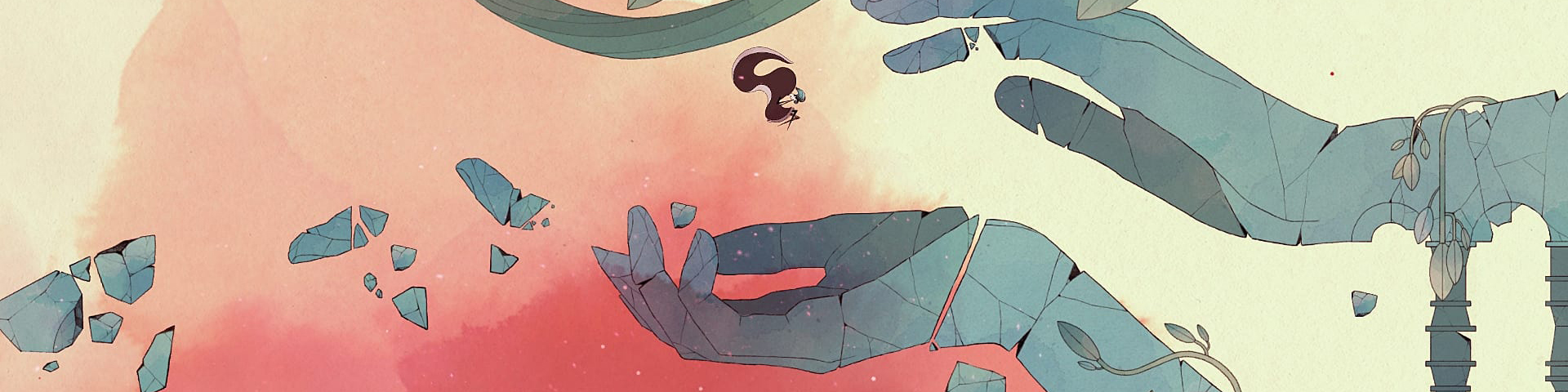
My first impression of the game was that it had beautiful visual and audio that accompanied the players as they played through the game. I though the game was very successful in expressing ideas with the shifting scenery and style of music as you moved through the different stages.
The game starts off the main character singing, then the world collapsing and her falling down into a colorless world. The girl seems weak in the beginning, but as you progress through the game and collecting little “fragments,” you start learning different abilities and will need to use them to keep progressing and eventually complete the game.
Throughout the game, there are different challenges where you either had to grab “fragments” in a tricky spot or there’s obstacles blocking the way. The player will need to overcome the challenges with simple controls and unlock new stages with the world changing color, representing the different stages of grief. While the game is in the form of a 2D side scrolling plat-former, it does contain elements that are not straight up 2D where players will need to move in both directions to go up or down a path. The side scrolling form of this game represents how people might go through the different stages of grief, but the aspect where players might need to move backwards to progress or collect “secret” fragments shows how the stages are not simply a linear progression, and the girl in this case moves back and forth between them to overcome her challenges.
Beginning: This game got me for a while because there’s no tutorial. I later find that we could either walk to the left or to the right. However, I’m looking for a purpose. What’s the purpose of this game?
“Gris”: Screen shot taken by Jimmy Wang
Color red: So now I figured out that we could actually jump and go to high and low places instead of walking only in horizontal direction. I was quite surprised when the map took me to a really high building through a series of stairs. It’s interesting to expand the playing experiences to a 3D instead of 2D. I love the color red and some of the scenes are very beautiful in this game. However, the music does sound a little melancholy. I’m guessing we should keep looking for colors? And probably Gris’ memories contained many colors and we’re trying to unlock each color by order???
Color green: Very interesting. I get a sense of how to play this game now. Still, three things that stand out for me are a). probing and searching the map b). color and the art design of different scenes c). music. I have to say the playing experience is wonderful. It is quiet and holy. It makes me feel that this game creates a world for me to explore. Then I quit the game and read the Wikipedia about the five stages of grief. Now everything starts to make sense. The colors in this game would match the five stages, which are denial, anger, bargaining, depression, acceptance. So I’m in the stage of bargaining.
Color blue: I observe that some colors are intertwined in each section. For example, when I was in the green stage, there was some red. And now, I see mainly blue but also red and green. I’m guessing these are the details that relate to the tiny psychological changes that take place in the minds of ill people. They’re not simply entering the next stage of grief without carrying any that was left from the previous stage with them. In fact, some parts stay with them and keep having an impact on them. Very careful and detailed design here. By the way, Gris can sing! What a great way this is to remind people that singing can heal the wounds of depressed people.
The end: I’m truly fascinated about this game. I definitely feel empathetic in the end when all the pieces of her body come together. This is truly a journey: a long, spiritual, arduous, but meaningful journey. What strikes me is that this game presents to me that people going through these five stages of grief actually would lose abilities to capture color. They feel vulnerable and they’re locked into their inner world. Their minds are closed to even colors, singing; and it is so hard to heal their wounds and help them gradually open their minds and take in these basic elements of life that we, normal healthy people, take for granted.
Reflection–I’m surprised that Gris is only a 2D side-scrolling platformer because I feel like there are plenty of room and spaces almost like a three-dimensional game. In some sense, they make a 2D game not like 2D. There are so many possibilities, so many places to search and explore. We’re almost taking a journey in Gris’ mind palace, and this gaming experience along with the curation of color and music stretches the maximum of a 2D game. And the game Gris is persuading people to be empathetic and understand the inner world of people who are experiencing grief or depression. Their inner mind palaces are actually full of colors, crys, shouts, and beauty.
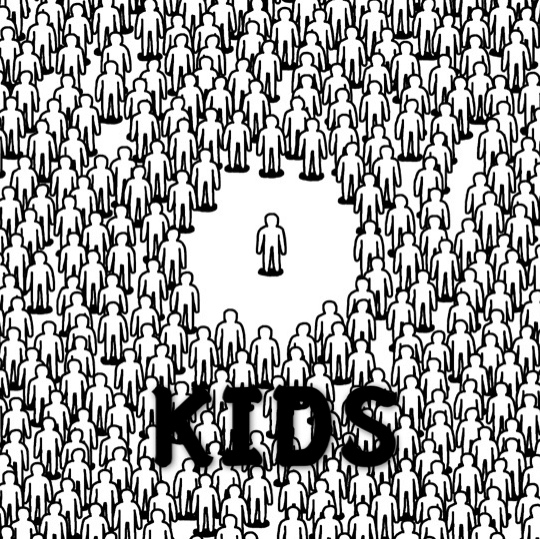
Image taken from game KIDS and edited by Wendy Sun
Our podcast episode in the Longest Rainy Sunday is about the game KIDS. We had a late start to this episode, meeting with Mr. Morgen on Thursday night to discuss about the content of our episode with it being due on Sunday. That being the case, there was effectively 3 days to complete and turn in this episode. Looking back at how we have worked, I have to say the efficiency and quality of our collaboration exceeded my expectations, creating an episode I am overall content with.
I was the producer, Wendy was the assistant producer, and Roy was the line producer. As a producer, I set up the time schedule for our meetings and job assigned, as well as leading the discussion/conversation we had in meetings. The assistant producer Wendy served a role similar to a manager in the group. She would take notes of conversations we had in meetings and organize work we have done. She edited the image we used for our thumbnail as well as putting together and submitting our final product. Roy was the line producer, but he really did much more than that. Since he has experiences producing music, he voluntarily took up the role of putting together and editing our audios and inserting the background music. The background music used was actual one produced by Roy himself! All members in this group contributed equally to the content of the episode as we pulled what we were going to say from previously written ideas and conversations we had about the game.
Our primary goals of this episode were to introduce the audience to the game KIDS and analyze how the simple form of this “interactive animation” is success full as a game, looking into some of the themes of the game, as well as sharing our own perspectives. I would say we achieved these goals in general, though not as in depth as we would like to. We first laid out points in our collaborative document, then each of us put down and elaborating ideas under them. This was done in the form of comments, since it would them be easier to make into a conversation. This form of brainstorming and script writing is very different from the usual essay writing I am accustomed to. When we “met up” to talk about our episode, lots of new ideas and more in-depth analysis came up that couldn’t be included in the episode due to the time limitation and the speaking format the podcast episode is in.
Comparing our episode to the first episode in the series that talked about Minecraft, the main difference seems to be tone of the speakers. While the first episode sounded more like a conversation, our episode seems more directed towards the audience due to the way our script written. My recommendation for later groups producing episodes would be to set up a general framework and communicate frequently.
As the main producer of Episode 3 titled “Unity in Among Us and Quarantine,” I took responsibility leading the entire group in planning, making concrete schedule, writing a script, and audio editing. I enjoyed that as a group leader I got to work on something that I felt passionate about and be generous with my time. I shaped the majority of how this project looked and I also felt grateful that my teammates inspired and supported me when I needed them. I want to thank Elaine for helping me finalize a overall plan and Andy for bringing out some really interesting ideas. Most importantly, even though I announced a very urgent meeting in slack without any notes in advance, my dear group members always tried their best to come. They wanted this to be good. And I’m proud of the work that we’ve done.
We’re still early in the entire series, but we did draw some inspiration from episode 1. We found their conservational format to be very interesting, and initially we did not have any elements of back-and-forth conversations in our plan. We adapted to a reasonable amount of discussions and started asking questions to each other so that audiences would feel engaged throughout. We also added carefully chosen music pieces. And these music pieces were lined up in a designed order of keys (key signatures) that would offer a smooth transition to one’s hearing experience. Again, this was just a nice addition that hopefully would add a nice complement to our original voice.
Our primary goal is to: 1). declare our critical play 2). present how Among Us has become a successful game 3). answer what message the game teaches. Since the schedule is limited, we were not able to draw references from a lot of places. For example, there was no time for us to plan an interview, go do it with someone, then gather results, and write about them. I’d like to work on that as strong references would effectively add credibility to our own episode.
I found the making of this podcast series to be a very similar process than any other project that we do in our outside this class. It required planning, researching, gathering ideas, collaborating, encouraging each other, confronting new difficulties, and finding ways to solve problems. There was a similar pattern. Also, I’ve learned that as a group leader I was vocal and positive all the time. I enjoyed surrounding ourselves with positivity and encouraging teamwork. Love it! I learned a lot from both Elaine and Andy. And I couldn’t be more happy about what we did!