Play Make Write Think

Gris: Beauty without words

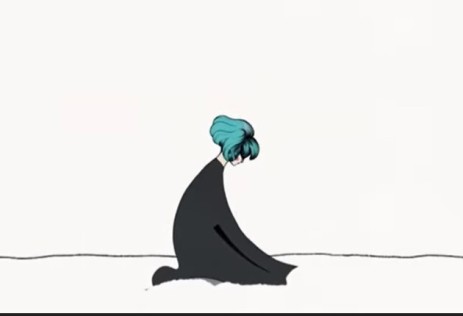
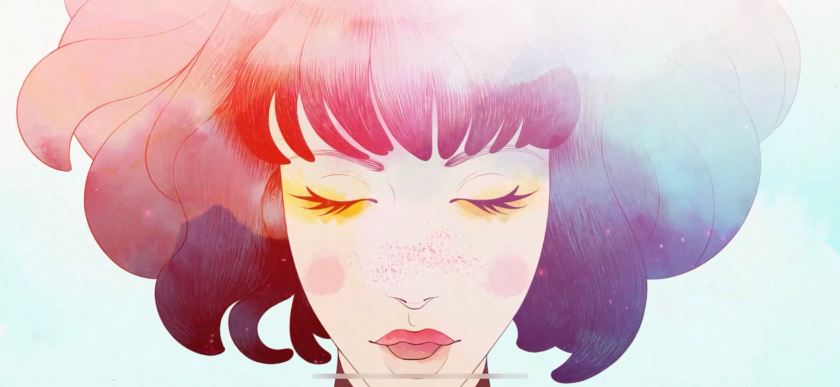
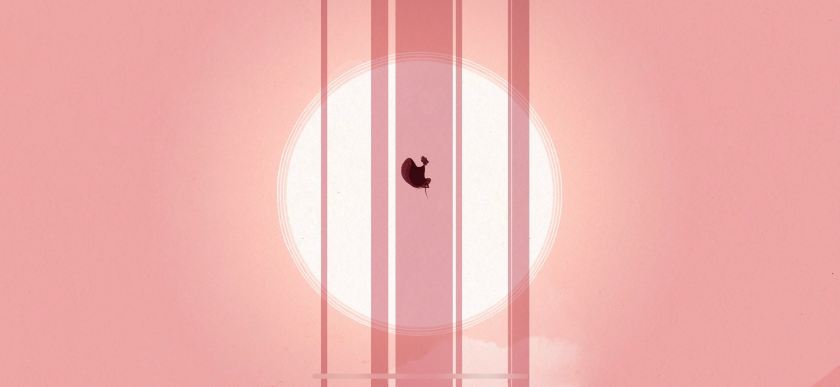
As I joined for the first time and I was amazed by the colors that were presented tome, but then all of a sudden I got a chill down my spine as the hand crumbled away as we were sent spiraling downwards into the unknown. I felt as though I was with this statue, almost reminiscent of hos Steven Universe has the statues throughout the series of the show foretelling something that hasn’t been found or something that was loss.

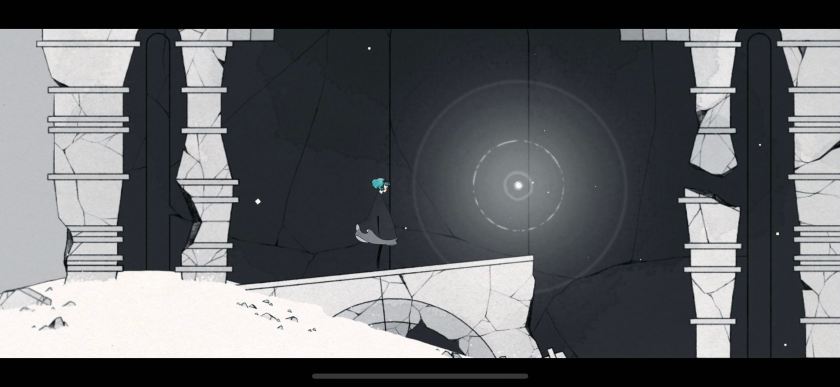
Now, I start running through this unknown territory and eventually encounter a white wisps that follows me around. Maybe it is there to remind me of something that is loss, but follows me in spirit.

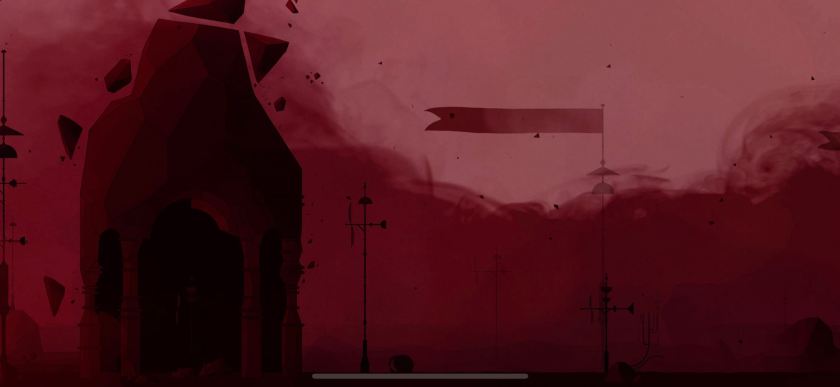
I continue through the puzzles with the white background until I take a turn and stumble onto this new Red society. A place filled with harsh winds and heavy blocks. I felt that my time here was very rage induced, but only ends up hurting myself. This is countered by becoming this large block that helps me gain stance and mobility through this tough time.

In the next area, the land of pink, I found myself walking normally. Then, I discovered this little cube fellow sulking on a rock. He runs away, but I end up chasing him and we become my companion for a short period of time. This helps me gain some help from others, but Im not quite sure how it fits together.

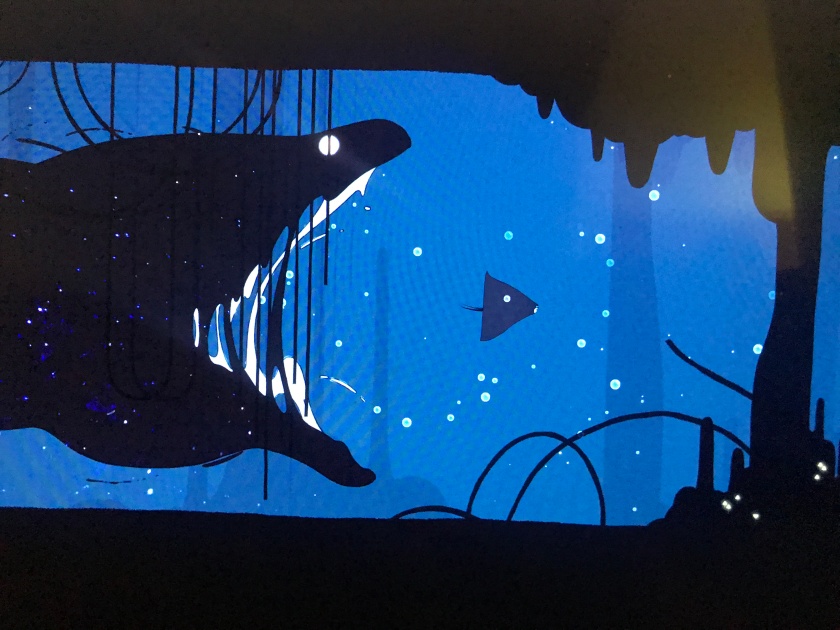
After my unsuccessful attempt at the temple, I start to feel loss and which lead perfectly into the next area of the game. This is the underwater portion, the land of deep sorrows that cant be expressed in words. I feel as though I don’t know exactly what is going on in the game at this point, but I can relate to the background of how the game made the water suppress the thoughts and ideas of positivity and just left you alone. Going around with this looming cloud of naught, left me drained.

I brought some personal feelings into the game at this point and I couldn’t continue as my feelings became to strong for enjoyable gameplay. I understand now that this is the purpose to explain the levels of grief without a textbook or some man with a degree diagnosing you with such and such.

Brady’s Liveblog of Gris

Denial: Minutes 1-5

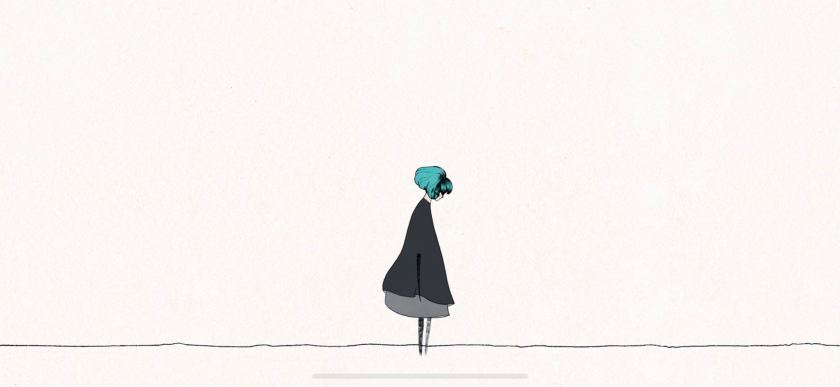
As I started to play through Gris, I had a minimal idea of the objective and meanings behind all the colors. Gris is a beautiful 2D side-scrolling platformer; the art style and soundtrack are pleasant stimulation as I play. I found out that I need to collect spheres of light that followed me (Gris) around as I explore the map. The beginning sequence showed Gris’s main character, having her world crumbling around her, and all the colors faded to white. I was left to walk onward slowly with the character’s head looking downward.

Anger: Minutes 5-45

Once Gris stumbled across the hand, she was standing on; she had an outburst with caused the color pallet of the game to swap from white and black to mainly red. The world became a desert with reoccurring sandstorms of Gris’s anger overwhelming me and throwing me back. The only option for me to move forward (to the right) was to hide from the storms of anger, or make myself heavy and slowly pushing my way through it. This stage was relatively easy and was my least favorite to play through. At this point, I had a tiny idea of what was going on, but I enjoyed the little puzzles. I noticed that when I needed to reach for the light, I had to crush a rock that had a creature inside. Upon destroying the rock, the animal ran away from me; Gris’s anger hurt someone else. When I found the hand again, the primary color changed to green.

Bargaining: Minutes 46-90

At this stage of the game, I began to fall in love with it. Walking left through the forest, I made a friend. Mini-Me liked apples; therefore, I fed him apples (obviously). This stage showcased mainly green with hints of red, demonstrating bargaining with leftover anger. The location was filled with climbing changing trees that either changed on their own or when I jumped. Upon completing the side stage and returning towards the core, I was met with an ability to glide. This allowed me to trek upward and have a run-in with the darkness I let escape when I fell into the white room. Making it to the stop, I had another run-in with the hand, which changed the primary color to blue, where Gris was depressed, an overwhelming feeling.

Depression: Minutes 91-145

Playing through this stage was probably the most enjoyable. It featured an overwhelming blue color and minimal displays of green and red. The puzzles and swimming features solidified my enjoyment of the game. I got to explore the underground cavern of Gris’s world. I had a rough time with the freezing mechanism and using it to my advantage; however, I figured it out and got to travel through the water. Again, I discovered the hand. Gris tried to sing, but she was unsuccessful. The color yellow was added to the pallet; however, yellow was not the primary color; this was only the start of her acceptance.

Acceptance: Minutes 146-220

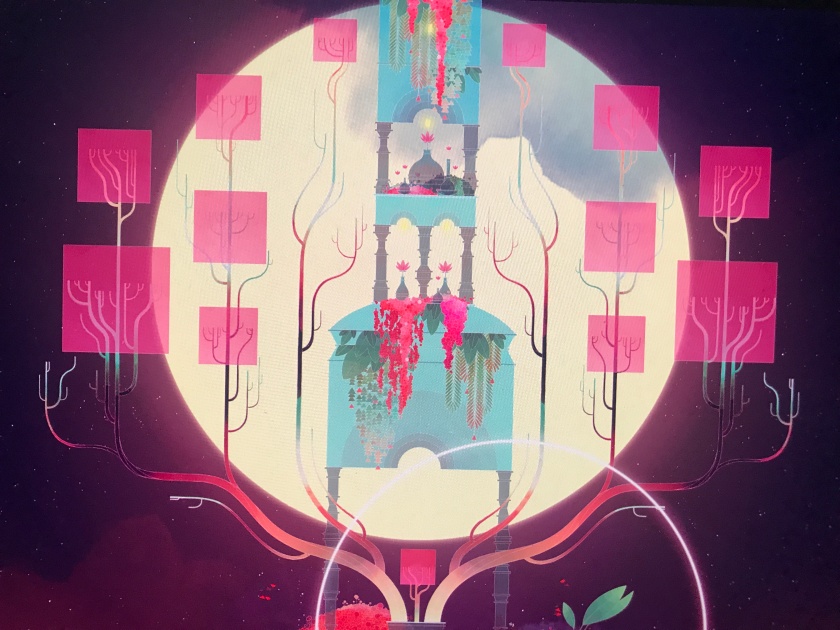
This stage started rough. The darkness chased Gris through the deep where only small amounts of yellow light guided the way. At first, I thought I had escaped until I got chased again. I was saved by a red turtle, which means my anger guided me and saved me from the darkness. Back at the core, I explored upward. This stage showcased all the colors working together, but not harmoniously. When I finally got to singing ability, I ran around the map seeing all the plants I could uncover. I enjoyed turning the world feature, which allowed the expansion of the map and new ideas for solving the puzzles. Upon reaching the top, I was met with a stellar view where yellow was the most prominent colors: Gris was recovering.

Ending: Minutes 221-240

When I thought I was beating the game, I was met with darkness again. This darkness took all the color from the world and swallowed me with it. The screen was covered in black. When I reached the top, the world was white and black, like at the start of the game. However, this did not stop me from making my way back up to the hand to sing once again. The color was brought back to the world, and I made my way to the light pathway. That is where my gaming experience of Gris ended.

Ending Thoughts:

Gris was a game I was not expecting. It ended in such a beautiful not that I went straight to Youtube to watch a video about it. Knowing the competition was organized by the Kübler-Ross model of the five stages of grief allowed me to focus on changing colors during my playthrough. I enjoyed noticing the hints of colors in new settings, such as the red in the bargaining stage. It demonstrated that there is no straightforward cycle of grief and that it is mixed together. Getting to learn more about the five stages of grief through Gris puts a perspective to what others are going through, especially the overwhelming feeling of depression that overtakes all other emotions. As I progressed, I noticed what affect the colors had on the layout. Red was dominant because it was the first color we experienced. Green allowed red to enter in the stage because anger does not just go away. Unlike the other colors, blue covered the entire screen when it was discovered. Finally, when yellow was introduced, it only took up the game’s background for a few moments. The way yellow was added demonstrated that acceptance does not just “click;” acceptance takes time and energy. I believe the developers chose to make a platform game to explain grief’s complicated feelings through 2D steps. Grief is not filled with simple, chronological stages. It is a mix of emotions that is not merely five stages. Gris is not a platformer like grief is not just stages, because you can expand on it and demonstrate let the other types of genres and stages influence and shape the experience. 

GRIS liveblog

Watched the opening sequence: The game started with a woman falling after a hand collapsed. This is most likely symbolism to life failing her and collapsing on her in some way.

The first part of the game is meant to represent the first stage of grief, denial. This is seen in her arched back, low head, and bent knees. Clicking the x button on the controller causes her to fall, farther symbolizing her disbelief. She seems to not believe what happened and is looking through her mind t figure it out. After walking a bit more it gets cloudy, and bird looking objects fly through, potentially symbolising her thought process in understanding what happened.

After the cloudy part, something seems to click in her mind. Her pace gets quicker, and she is finally able to jump. This potentially represents the second step in grief, resistance. It is characterized by frustration and anger at others and their circumstance. Rocks appear on the screen potentially symbolizing the hardness of her mind.

After walking more, she interacts with a glowing object and seems to uplift herself. This could symbolize bargaining and hope, the third stage. She sees the object as hope and is looking to avoid farther despair. 

She seems to collect these objects, and they create paths for her. Her hope could be creating different opportunities for her, and advancing her growth from a state of grief. 

After she sees the remains of the collapsed hand, symbolizing seeing the person or event that failed her, she falls down in despair, and the color scheme changes from white to red. This represents the fourth stage of grief, sadness. 

After a large fall, a red wind seems to be pushing her back, but you are able to move forward. It seems like she is trying to move forward from her grief. After moving higher, fighting the wind, a large structure starts moving her to higher ground. This could be the start of the final stage, acceptance. 

After interacting with an altar, she is able to harden herself to combat the wind. This represents the resolve she got from her hardships and her ability to push against the world. The next sequences seem a bit strange and hard to interpret. She falls down and sees a reflection of herself. When she reaks a statue of a grieving woman, she gets pushed back up. After connecting two circles, objects start moving around, helping her get to where she needs.

After completing these puzzles she sees the hands again, but this time the screen turns green, and she seems to grow positively rather than negatively. There seems to be much more life than in the previous parts of the game. 

She befriended a stone creature which can be seen as a step in moving forward.

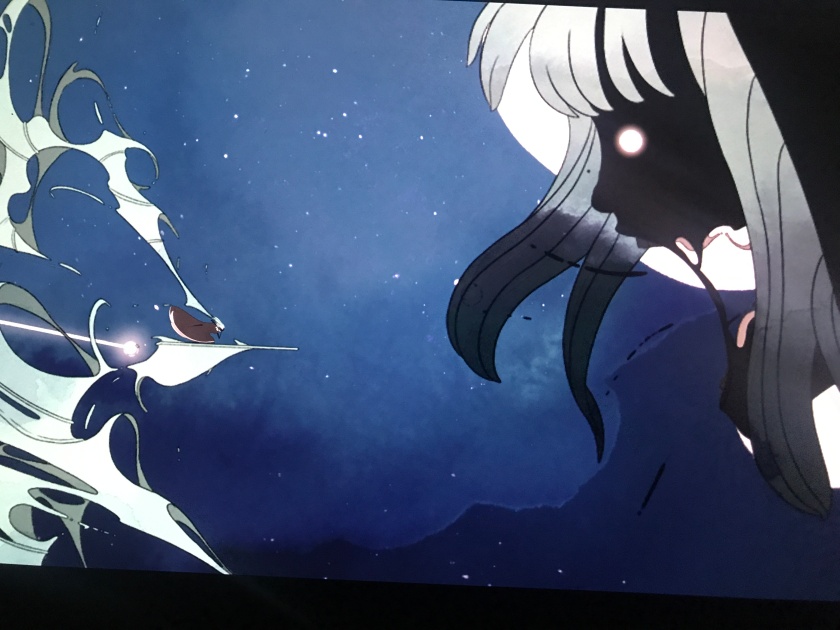
The stone creature helps her find a light object, which allows her to move forward. She is accepting others more. She has a fight with a large black bird which can be seen as representing her hardship. She rings a bell in order to defeat it. She sees the hand again, and this time the picture turns blue and it starts raining, symboling another period of sadness. 

The water area is challenging to get through, but after I got through it I found it interesting that she seemed to get her voice back. She might have lost it when her ordeal started. With her voice, she is able to continue to do advance herself.

Looking back, I think I might have been over analyzing the game and been moving too quickly. The different colors and stages represent the stages of grief. The first one is denial. The second one is anger, represented by the color red and the ferocity of the wind. The third one is bargaining, as she bargains with the stone creature to advance herself. The third one is sadness, represented by water and tears. The last one is reflection and acceptance. In this stage she confronts the stature, and regains her voice.]

This game is fairly complex for a 2-D platform game. It does not have the sense of directionality that a normal one has. You go all the way up in the sky, or way down to the depths below sea level. Sometimes you go backward to go forwards. The huge scope and lack of directionality are what make this a perfect medium for what the makers wanted you to feel. They wanted you to understand the stages of grief by allowing you to explore the world, solve puzzles, and observe the symbolism that the game produces. The game does a brilliant job of allowing the gamer to go through the stages of grief without being obvious. It is both hidden behind the platformer, and an integral part of it. 
Gris Liveblog

Below is my experience playing the game Gris

Going into the game, I already had a rough idea that the game depicted the five stages of grief. I’m not sure whether that mindset was for good, but it helped me make sense of it sooner than I would’ve unknowingly. 

The opening scene makes it quite evident that the girl has lost her voice and her world is breaking apart. Her life’s turned upside down. Minutes into the game, after the premise was set, I had the control. I was playing the game on my computer. Not being a video game person, I had no clue at first about how to make that girl stand up and walk. The arrow keys, apparently, weren’t working. It took toggling between W, A, S, D and the Spacebar key to control that girl. The audio and the visuals of the game were commendable. I could feel myself running away, treading deeper into myself. From grey to crimson to brown to a daylight tone, the different hues brought a different vibe and meaning. It took me two hours to reach that part, probably because of my inexperience, but I am definitely going to resume later. Throughout the game, the girl gets more courage with time signified by the power gained from the shining constellation-like dots and the box that shields her from the storm. 

There were parts where you had to make her climb onto a bug to move forward. To me, that portrayed how a person requires support and upliftment from humans to revive from grief. The most thrilling part in the game was falling underground to reach a monochrome landscape where your shadow seemed to follow you. That reflection made it seem like a  re-established connection with the inner self. It meant facing your fears by going to that deep level just to rise higher than before. The next scene opens with the girl emerging on the top of a stick structure.

Coming to the genre, Gris is said to be a 2D platform game. I am new to the platformer concept, but by its Wikipedia definition, I think that the game defies the action aspect of a platformer. There is no existence of a villain or fighting or shooting. The game is more like a journey of the sole protagonist through various stages of grief. The game developers chose a unique approach by quantifying grief. I think they chose to make a platformer because it’s a game which is characterised by the levels involved just like the stages in what they intended to depict ( Kübler-Ross model of the five stages of grief ). They are making attempts to persuade us to never give up. There’ll be times you fall off a building or get pushed backwards from a storm (metaphorically drowning more in grief), but it’s about having the will that guides the way.

Liveblogging Gris

10:15

I am going to liveblog playing Gris today. (Mostly irrelevant information, but still felt like putting it out there– I’ve spent a huge chunk of my evening trying to download the game on my laptop, and then getting it to work. I’ve had to disable all sorts of firewalls and firevaults and other things I don’t understand the meaning of, so hopefully it’s all worth it.)

Beginning of the game

10:23 PM

When I saw the opening scene of Gris, the first thing that struck me was the animation. It was beautiful. Even when the girl free fell downwards, it was beautiful. I thought to myself, “This game is supposed to be about grief, right? Why does this seem almost peaceful?”

10:24 PM

This feeling didn’t last too long though.

I try to move the character forward, but her walk is sluggish, and her feet are dragging across the floor. Each step seems cumbersome, and every few seconds she plops down onto the ground. I’m already frustrated within a few seconds.

10:33 PM

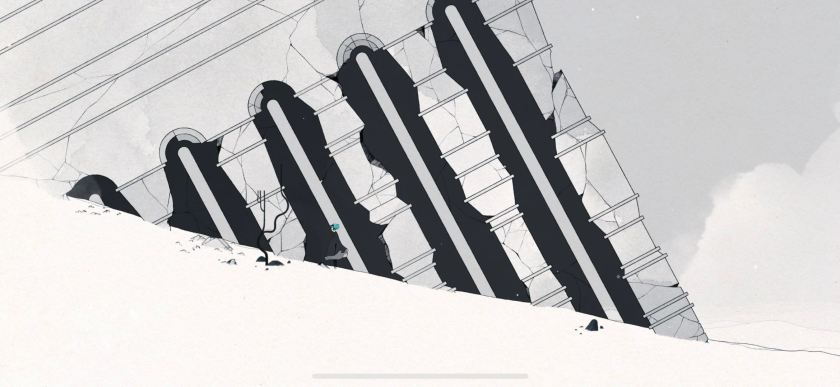
All of a sudden, much to my relief, the girl gets a blast of energy and soars across the landscape. This gives me a chance to take note of the environment. The place is in ruins. Every thing is destroyed, there are broken sections of buildings around. It looks like the aftermath of a devastating battle, one without any survivors. Still, there is something poetic about this destruction. It’s almost painfully beautiful. As I continue moving forward, I find myself actively probing the extent of this world, and trying to figure out what my character can and cannot do. I discover that the pressing the space bar allows her to jump. At a certain point, the path was blocked by a huge boulder and I could not move forward. Eventually, I discovered that I was actually supposed to go back and climb onto a certain structure to continue this journey. This path probably isn’t going to be as straightforward and linear as I anticipated.

Ruins vs More Definite Structures

10:51 PM

At some point, I am told that the color red is introduced, and the monochrome is replaced with shades of red. As I progress further, the ruins are replaced with more manufactured structures. I make the mistake of thinking that this would make the world easier to navigate. It is quite the opposite. Passing each obstacle becomes a little more difficult than before. There are new deterrents in my way, including sand storms which throw me off course every few seconds. However, as the conditions become harsher, I feel the character becoming stronger too. This is probably a combination of me (the player) becoming more accustomed to the game, as well as the character gaining new skills (like the ability to turn into a huge block of stone to resist storms, and to break things).

11:07 PM

I’ve been playing this game for a while now, and given the fact that I am still in the red zone, I’m not going to finish any time soon. It all seems a little overwhelming, and so I notice myself telescoping while playing. The final goal is likely to unlock all the colors, but before that, I need to make it past each ‘structure’, like a cave, or a collection of platform-like things. Before that, I need to collect each of those shooting stars to create a constellation-bridge-type thing to cross certain sections. Doing this makes the goal seem a little more realistic and achievable.

The cave where I’m stuck

11:32 PM

Currently, I am stuck inside this cavern filled with gears and rotating platforms. For some reason, it reminds me of the inside of a huge clock. I’ve been trying to advance past it for more than 20 minutes, but despite my frustrated groans and annoyed whining, I can’t do it. I don’t have enough shooting stars to build the bridge I need. Now, I think my only option is to start the game all over again.

Liveblogging Gris

10:15

I am going to liveblog playing Gris today. (Mostly irrelevant information, but still felt like putting it out there– I’ve spent a huge chunk of my evening trying to download the game on my laptop, and then getting it to work. I’ve had to disable all sorts of firewalls and firevaults and other things I don’t understand the meaning of, so hopefully it’s all worth it.)

Beginning of the game

10:23 PM

When I saw the opening scene of Gris, the first thing that struck me was the animation. It was beautiful. Even when the girl free fell downwards, it was beautiful. I thought to myself, “This game is supposed to be about grief, right? Why does this seem almost peaceful?”

10:24 PM

This feeling didn’t last too long though.

I try to move the character forward, but her walk is sluggish, and her feet are dragging across the floor. Each step seems cumbersome, and every few seconds she plops down onto the ground. I’m already frustrated within a few seconds.

10:33 PM

All of a sudden, much to my relief, the girl gets a blast of energy and soars across the landscape. This gives me a chance to take note of the environment. The place is in ruins. Every thing is destroyed, there are broken sections of buildings around. It looks like the aftermath of a devastating battle, one without any survivors. Still, there is something poetic about this destruction. It’s almost painfully beautiful. As I continue moving forward, I find myself actively probing the extent of this world, and trying to figure out what my character can and cannot do. I discover that the pressing the space bar allows her to jump. At a certain point, the path was blocked by a huge boulder and I could not move forward. Eventually, I discovered that I was actually supposed to go back and climb onto a certain structure to continue this journey. This path probably isn’t going to be as straightforward and linear as I anticipated.

Ruins vs More Definite Structures

10:51 PM

At some point, I am told that the color red is introduced, and the monochrome is replaced with shades of red. As I progress further, the ruins are replaced with more manufactured structures. I make the mistake of thinking that this would make the world easier to navigate. It is quite the opposite. Passing each obstacle becomes a little more difficult than before. There are new deterrents in my way, including sand storms which throw me off course every few seconds. However, as the conditions become harsher, I feel the character becoming stronger too. This is probably a combination of me (the player) becoming more accustomed to the game, as well as the character gaining new skills (like the ability to turn into a huge block of stone to resist storms, and to break things).

11:07 PM

I’ve been playing this game for a while now, and given the fact that I am still in the red zone, I’m not going to finish any time soon. It all seems a little overwhelming, and so I notice myself telescoping while playing. The final goal is likely to unlock all the colors, but before that, I need to make it past each ‘structure’, like a cave, or a collection of platform-like things. Before that, I need to collect each of those shooting stars to create a constellation-bridge-type thing to cross certain sections. Doing this makes the goal seem a little more realistic and achievable.

The cave where I’m stuck

11:32 PM

Currently, I am stuck inside this cavern filled with gears and rotating platforms. For some reason, it reminds me of the inside of a huge clock. I’ve been trying to advance past it for more than 20 minutes, but despite my frustrated groans and annoyed whining, I can’t do it. I don’t have enough shooting stars to build the bridge I need. Now, I think my only option is to start the game all over again.

GRIS

First impression basis- I like this game more than gone home, although, there was kind of a slow start, the pace of game is much better than that of gone home. The girl in the game loses her voice, the game feels gloomy which led me to believe that this game is about stress or fear, or maybe just overcoming a rough time in your life. I think has a more of an artistic feel to it. It feels more like a painting than a game for some reason. The setting of this game has a post-apocalyptic feel to it. 

I was initially stuck at one part with a big rock, couldn’t figure out what to do, while goofing around I finally figured out I had to go to the opposite direction and basically jump and around and could then climb on that structure, and actually start the game.

For me this did not feel like a typical platform type of game, because I imagined platform games would be like clearing “floors”/levels, while on the other hand the Gris’ clearing level would be to add colors, and even if we had to like climb structures we ultimately ended up on the same “floor”. Moreover, I used telescoping, which I think is to break down goals, which could be to obtain those white-colored “orbs”, and get new abilities like turning into that box so that you don’t be pushed back when the wind starts to blow.

I wasn’t able to transition to another color, as I still am stuck at one part and cannot seem to clear it. Hope to clear it soon!

Side Quest 6: Gris Liveblog

Screenshot from my phone

Since I used my iphone to download Gris, I incorporated some screenshots while I was playing.

The game begins with a fantastic animation of the main character falling from the sky. Different from other 2D side scrolling games, the introduction to the setting is extremely beautiful. It made me feel like I came into a fantasy world of drawings.

As the main character fell from the sky, she seems to be very heartbroken. Her eyes are looking towards the ground and even the surrounding displays the absence of color.

When I continues, I learnt that the character can go forwards or backwards by controlling the left-side of the screen and jump by controlling the right-side of the screen. As the plot progresses, I probed more options. For instance, I can collect the shining diamonds and it will follow me for the entire journey.

Then, the story develops into the next stage, Red. In this challenge, I would face red sandstorms and the character will fall backwards during the periodic sandstorms. To fight the sandstorms, I was introduced to a new movement, forming a heavy square and I later discovered that the heavy square can break things rather than simply used in battling the sandstorm. Even though I was stuck by the end of Red for three hours, I still got a sense of probing and telescoping in Gris. For me, Gris is definitely not a traditional 2D side scrolling games, it is more like a masterpiece of animation. It teaches me how to discover new functions. Moreover, the game does has any enemies, yet the biggest enemies are the environment and yourself. For me, this is more challenging than the traditional 2D side scrolling games like Super Mario. The five stages of grief is also displayed in this game. The shocking introduction and the resisting sandstorms displayed the first two stage of grief, Shock and denial. I think the most important point that the creator is trying to covey is the reality Gris feels to the players, and it teaches players step-by-steps to overcome grief.

Sweet Sixteen

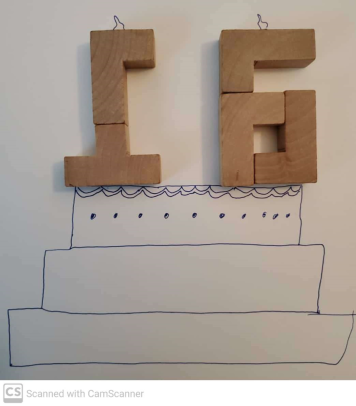
I started this assignment by trying to find interesting things around my room. I looked at some participation trophies, but that wouldn’t work. I then looked at a Rubix cube, some pencils, and school supplies. Nothing really stood out to me until I saw my block puzzle. One of those puzzles where you have to make a block out of seemingly randomly shaped wooden figures. I did not know what I would make yet, but I decided to make some sort of figure with the blocks. After placing the blocks in different positions, all I thought of were using a few blocks as horns, or maybe legs for an animal. Admittedly, I am bad at drawing animals, so I tried to stray off that path. After a few more tries, I figured out how to make the number 1. Using the other blocks, I could only make the number 16, so I decided to work with that. I immediately thought of sweet 16 when I thought of things to make, so I made a birthday cake using the numbers as candles.

If Birds Had Teeth

I was scrounging around my desk and through drawers when I saw my staple remover. The sharp teeth used to take out staples looked exactly like the teeth of an alligator snapping turtle. Then I started thinking of animals that could use some sharp teeth. The first thing I thought was birds because they don’t have teeth. How scary would it be if a soaring animal can take your head off with its sharp, menacing teeth? I then started brainstorming of birds that would look the most terrifying with sharp teeth. Obviously, the first bird that shot up to my brain was the bald eagle. Funny enough, I started drawing the shape of the bald eagle but it turned more into a seagull, so I just stuck with it, thus why the background is a blue ocean.

css.php