Play Make Write Think

A Facet of Grief

A scary moment, but a very realistic one.

Initial Thoughts: Wow, this game is touching. The graphics, the music-I feel transported to a new world. The image of starting on the floor evoked a feeling of real sadness. At the start I couldn’t figure out how to move, and then finally D started to work. I walked, slowly, until the music changed and I started to run-and now I could jump too! It felt invigorating to run, especially with the shift in music. There was definitely this sense of bliss because I was running in a world with disaster all around. I think the bright lights are spirits, helping me navigate through a broken world. The broken hands as pieces of destruction are undoubtedly, a bit unsettling. 

Reflection: I am not sure what rules there are set for video games, but this game definitely felt different. I enjoyed this change immensely, though. I felt as if I was walking through a story, with the background as stunning water colors and my movements heavily influenced by the tone of the music. Although I didn’t know they were called platform-games until last week, I love this style of gaming. I think platform-games such as this one feel more realistic–in life, we are usually fighting against the internal struggles within us rather than the external struggles in front of us. In Gris, I felt the main avatar continuously pushing themself forward even when they were being pushed back. In anger for instance, the wind pushes against me. Every time I would make it slightly more forward, I rolled back in a ball and flew back. I had to continuously push myself to make it to the other side.

I think a video game is so powerful to tell a story of grief. Starting with the beginning, I understood from the side quest instructions that I was in the first stage of grief: denial. That is what denial must be, a figurative stage of walking, jumping, running–just doing anything to get a grip on what is going on. As gamers, we are in denial of the real message or conflict of the game in those initial stages. As grievers, we are processing that someone is no longer, a confusing reality that many face. In that regard, I think the creators were extremely successful in exploiting the medium because they were more easily able to evoke sadness and empathy from the users.
Gris Post

I’ve just secured my second white ball, or wisp, and so far this game has stood out in a few ways. Firstly, the vast amount of emotion expressed by a character whose face is only barely visible is masterfully done. Gris is simply broken, and you can tell by the way that she fell/sat down at the very start of the game. The background expresses a different feeling, one of haze and confusion, as clouds and wind obscure the undulating shapes. The actual structures make me feel as though I’m walking through ruins of an Ancient Greek city – I’m not totally sure how to feel about this yet. 

At this point, I’ve unlocked my first color – red. Gris has just gone down the huge hill and is falling through the air, her shadowy frame in stark contrast with the yellow sun. This is a very pretty shot, and I think it conveys the stage of anger well.

I’ve just been exposed to the maroon gusts of wind. I can’t seem to place a purpose for these yet, it just feels like they are there to make the game more difficult. The color scheme has stayed in red and white so far, but now it has taken a turn for a tiny bit more orange but still majorly red. The background shapes are changing too. 

In terms of themes expressed by the game, particularly relating to grief, I felt as though the idea of the game is for you as the player to help Gris find herself. This sounds naive I’m sure, but upon completion of the first objective, you receive your first piece of information: Gris, your character’s name. And as you probe through the courses, with the small white balls (I know there’s a better word here, I just can’t think of it) as ‘currency’ you learn more about Gris. You see the ruins of a once great city now crumbling at its seams, left to bear a terrible burden, perhaps a symbol of denial. The color red represents anger, with the gusts of wind only pushing you farther back along. But now, you can rebuild. Your world starts anew, rife with unique structures that make use of your anger (windmills) and temples literally built on your sadness (the columns are made out of a woman crying). But the important thing is that you move forward.

This, I think, is the most brilliant aspect of the game: it makes use of the platformer idea of continuously moving to the right to represent how one must continue to move forward after a loss. Do not be fooled: this does not mean success is reached when you are at the right-most pillar (tasks and such can be found all around the map), which is an example of how the genre has been broken. In Super Mario, if you make it all the way to the right, you’ve succeeded. In Gris, this has been turned on its head – the key idea holds true: moving to the right is a step toward a life anew, but the path to ‘success’ in coping with grief is not well-defined in the same way a platformer is.

Liveblogging Gris

        As the moment I opened this game, the initial impression it gave it me was just one word: beauty. Yes, the arts, the color, the design of the character are so delicate that make me think I was watching a movie rather than playing a video game. It brings me not just the mindset to plat a simple game, but to feel the complex and unknown emotions the girl in the game has. 


        As I began moving with Gris and jumped and moved forward, I was a little bit confused what was the goal of the play, since most games I experienced before had clear purposes and standpoints. However, there was nothing I could do other than moving forward. As I kept walking, the scene was filled with red blood gradually, feeling with a depressed atmosphere, echoing with the overall artistic sadness and depression. It also made me notice that the meaning of Gris’s name that it originates from Spanish, meaning gray, somewhat symbolizing painfulness and sorrow that she went through. A sense of empathy immediately rise from my inner heart; therefore, I substitute myself as Gris to experience the rest of the story. 


        Then I fell from high in clouds, falling into a large scale of desserts. The color around me was no longer red, green, blue, and yellow; instead, it was only grey and white. Everything was full of depression, anger, and denial. It might be an event that Gris can never forget in her entire life or a heart knot she could never compromise with herself. 


        But this game is not only about emotions and story, though. As I moved along, there were various settings, space, buildings, and even underwater space. One thing that is quite unique is that Gris has to turn to square to avoid the danger in the upcoming sand storm. Many challenging but engaging skills were gradually unlocking as the game went on. As a gamer, I had to utilize different knowledge in physics to solve a variety of puzzles. 


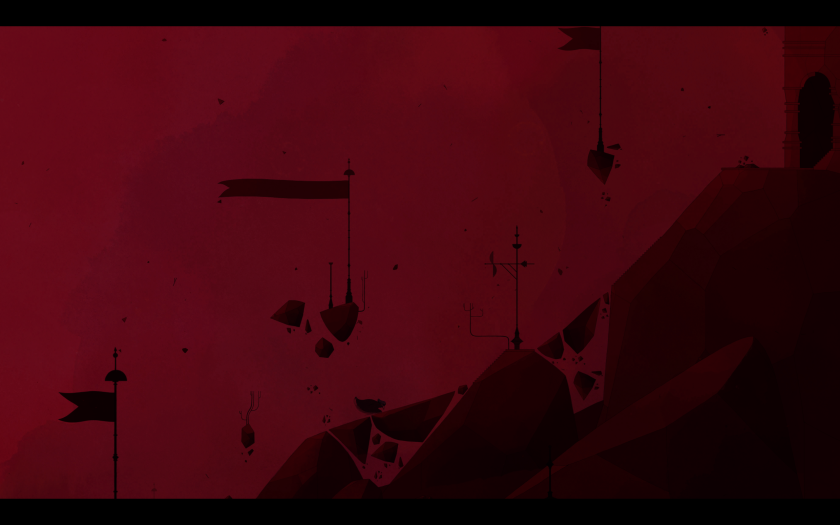
        Here is a very artistic and impressive picture from the beginning of the game, which leaves me a great view on the sounding, picturing, designing effects of the game: 

Liveblogging Gris

        As the moment I opened this game, the initial impression it gave it me was just one word: beauty. Yes, the arts, the color, the design of the character are so delicate that make me think I was watching a movie rather than playing a video game. It brings me not just the mindset to plat a simple game, but to feel the complex and unknown emotions the girl in the game has. 


        As I began moving with Gris and jumped and moved forward, I was a little bit confused what was the goal of the play, since most games I experienced before had clear purposes and standpoints. However, there was nothing I could do other than moving forward. As I kept walking, the scene was filled with red blood gradually, feeling with a depressed atmosphere, echoing with the overall artistic sadness and depression. It also made me notice that the meaning of Gris’s name that it originates from Spanish, meaning gray, somewhat symbolizing painfulness and sorrow that she went through. A sense of empathy immediately rise from my inner heart; therefore, I substitute myself as Gris to experience the rest of the story. 


        Then I fell from high in clouds, falling into a large scale of desserts. The color around me was no longer red, green, blue, and yellow; instead, it was only grey and white. Everything was full of depression, anger, and denial. It might be an event that Gris can never forget in her entire life or a heart knot she could never compromise with herself. 


        But this game is not only about emotions and story, though. As I moved along, there were various settings, space, buildings, and even underwater space. One thing that is quite unique is that Gris has to turn to square to avoid the danger in the upcoming sand storm. Many challenging but engaging skills were gradually unlocking as the game went on. As a gamer, I had to utilize different knowledge in physics to solve a variety of puzzles. 


        Here is a very artistic and impressive picture from the beginning of the game, which leaves me a great view on the sounding, picturing, designing effects of the game: 

Podcast Reflection

        Producing a podcast is a brand-new experience for me in my entire life. At the beginning stage of preparing for this project, I had no idea how should I start this assignment. Even some simple questions raised in my mind, such as what does podcast should actually look like? what should we talk about in it, etc. Fortunately, I was not alone; I have two wonderful teammates who went through all the challenges together. Though the beginning is hard, we made outlines, appointment with professor, and individual discussions to perfect the project.


      The part I enjoyed most was the brainstorming we went through altogether. Among Us is a game that has unique features, containing meanings and brings popularities especially under such a pandemic time. Digging deep with several minds together, we combined “unity” “togetherness” “identity” and even disclose the truth about human nature relating to the literature we discussed in the lecture.    

Gris Liveblog

Below is my experience playing the game Gris

Going into the game, I already had a rough idea that the game depicted the five stages of grief. I’m not sure whether that mindset was for good, but it helped me make sense of it sooner than I would’ve unknowingly. 

The opening scene makes it quite evident that the girl has lost her voice and her world is breaking apart. Her life’s turned upside down. Minutes into the game, after the premise was set, I had the control. I was playing the game on my computer. Not being a video game person, I had no clue at first about how to make that girl stand up and walk. The arrow keys, apparently, weren’t working. It took toggling between W, A, S, D and the Spacebar key to control that girl. The audio and the visuals of the game were commendable. I could feel myself running away, treading deeper into myself. From grey to crimson to brown to a daylight tone, the different hues brought a different vibe and meaning. It took me two hours to reach that part, probably because of my inexperience, but I am definitely going to resume later. Throughout the game, the girl gets more courage with time signified by the power gained from the shining constellation-like dots and the box that shields her from the storm. 

There were parts where you had to make her climb onto a bug to move forward. To me, that portrayed how a person requires support and upliftment from humans to revive from grief. The most thrilling part in the game was falling underground to reach a monochrome landscape where your shadow seemed to follow you. That reflection made it seem like a  re-established connection with the inner self. It meant facing your fears by going to that deep level just to rise higher than before. The next scene opens with the girl emerging on the top of a stick structure.

Coming to the genre, Gris is said to be a 2D platform game. I am new to the platformer concept, but by its Wikipedia definition, I think that the game defies the action aspect of a platformer. There is no existence of a villain or fighting or shooting. The game is more like a journey of the sole protagonist through various stages of grief. The game developers chose a unique approach by quantifying grief. I think they chose to make a platformer because it’s a game which is characterised by the levels involved just like the stages in what they intended to depict ( Kübler-Ross model of the five stages of grief ). They are making attempts to persuade us to never give up. There’ll be times you fall off a building or get pushed backwards from a storm (metaphorically drowning more in grief), but it’s about having the will that guides the way.

Liveblogging Gris

10:15

I am going to liveblog playing Gris today. (Mostly irrelevant information, but still felt like putting it out there– I’ve spent a huge chunk of my evening trying to download the game on my laptop, and then getting it to work. I’ve had to disable all sorts of firewalls and firevaults and other things I don’t understand the meaning of, so hopefully it’s all worth it.)

Beginning of the game

10:23 PM

When I saw the opening scene of Gris, the first thing that struck me was the animation. It was beautiful. Even when the girl free fell downwards, it was beautiful. I thought to myself, “This game is supposed to be about grief, right? Why does this seem almost peaceful?”

10:24 PM

This feeling didn’t last too long though.

I try to move the character forward, but her walk is sluggish, and her feet are dragging across the floor. Each step seems cumbersome, and every few seconds she plops down onto the ground. I’m already frustrated within a few seconds.

10:33 PM

All of a sudden, much to my relief, the girl gets a blast of energy and soars across the landscape. This gives me a chance to take note of the environment. The place is in ruins. Every thing is destroyed, there are broken sections of buildings around. It looks like the aftermath of a devastating battle, one without any survivors. Still, there is something poetic about this destruction. It’s almost painfully beautiful. As I continue moving forward, I find myself actively probing the extent of this world, and trying to figure out what my character can and cannot do. I discover that the pressing the space bar allows her to jump. At a certain point, the path was blocked by a huge boulder and I could not move forward. Eventually, I discovered that I was actually supposed to go back and climb onto a certain structure to continue this journey. This path probably isn’t going to be as straightforward and linear as I anticipated.

Ruins vs More Definite Structures

10:51 PM

At some point, I am told that the color red is introduced, and the monochrome is replaced with shades of red. As I progress further, the ruins are replaced with more manufactured structures. I make the mistake of thinking that this would make the world easier to navigate. It is quite the opposite. Passing each obstacle becomes a little more difficult than before. There are new deterrents in my way, including sand storms which throw me off course every few seconds. However, as the conditions become harsher, I feel the character becoming stronger too. This is probably a combination of me (the player) becoming more accustomed to the game, as well as the character gaining new skills (like the ability to turn into a huge block of stone to resist storms, and to break things).

11:07 PM

I’ve been playing this game for a while now, and given the fact that I am still in the red zone, I’m not going to finish any time soon. It all seems a little overwhelming, and so I notice myself telescoping while playing. The final goal is likely to unlock all the colors, but before that, I need to make it past each ‘structure’, like a cave, or a collection of platform-like things. Before that, I need to collect each of those shooting stars to create a constellation-bridge-type thing to cross certain sections. Doing this makes the goal seem a little more realistic and achievable.

The cave where I’m stuck

11:32 PM

Currently, I am stuck inside this cavern filled with gears and rotating platforms. For some reason, it reminds me of the inside of a huge clock. I’ve been trying to advance past it for more than 20 minutes, but despite my frustrated groans and annoyed whining, I can’t do it. I don’t have enough shooting stars to build the bridge I need. Now, I think my only option is to start the game all over again.

Liveblogging Gris

10:15

I am going to liveblog playing Gris today. (Mostly irrelevant information, but still felt like putting it out there– I’ve spent a huge chunk of my evening trying to download the game on my laptop, and then getting it to work. I’ve had to disable all sorts of firewalls and firevaults and other things I don’t understand the meaning of, so hopefully it’s all worth it.)

Beginning of the game

10:23 PM

When I saw the opening scene of Gris, the first thing that struck me was the animation. It was beautiful. Even when the girl free fell downwards, it was beautiful. I thought to myself, “This game is supposed to be about grief, right? Why does this seem almost peaceful?”

10:24 PM

This feeling didn’t last too long though.

I try to move the character forward, but her walk is sluggish, and her feet are dragging across the floor. Each step seems cumbersome, and every few seconds she plops down onto the ground. I’m already frustrated within a few seconds.

10:33 PM

All of a sudden, much to my relief, the girl gets a blast of energy and soars across the landscape. This gives me a chance to take note of the environment. The place is in ruins. Every thing is destroyed, there are broken sections of buildings around. It looks like the aftermath of a devastating battle, one without any survivors. Still, there is something poetic about this destruction. It’s almost painfully beautiful. As I continue moving forward, I find myself actively probing the extent of this world, and trying to figure out what my character can and cannot do. I discover that the pressing the space bar allows her to jump. At a certain point, the path was blocked by a huge boulder and I could not move forward. Eventually, I discovered that I was actually supposed to go back and climb onto a certain structure to continue this journey. This path probably isn’t going to be as straightforward and linear as I anticipated.

Ruins vs More Definite Structures

10:51 PM

At some point, I am told that the color red is introduced, and the monochrome is replaced with shades of red. As I progress further, the ruins are replaced with more manufactured structures. I make the mistake of thinking that this would make the world easier to navigate. It is quite the opposite. Passing each obstacle becomes a little more difficult than before. There are new deterrents in my way, including sand storms which throw me off course every few seconds. However, as the conditions become harsher, I feel the character becoming stronger too. This is probably a combination of me (the player) becoming more accustomed to the game, as well as the character gaining new skills (like the ability to turn into a huge block of stone to resist storms, and to break things).

11:07 PM

I’ve been playing this game for a while now, and given the fact that I am still in the red zone, I’m not going to finish any time soon. It all seems a little overwhelming, and so I notice myself telescoping while playing. The final goal is likely to unlock all the colors, but before that, I need to make it past each ‘structure’, like a cave, or a collection of platform-like things. Before that, I need to collect each of those shooting stars to create a constellation-bridge-type thing to cross certain sections. Doing this makes the goal seem a little more realistic and achievable.

The cave where I’m stuck

11:32 PM

Currently, I am stuck inside this cavern filled with gears and rotating platforms. For some reason, it reminds me of the inside of a huge clock. I’ve been trying to advance past it for more than 20 minutes, but despite my frustrated groans and annoyed whining, I can’t do it. I don’t have enough shooting stars to build the bridge I need. Now, I think my only option is to start the game all over again.

Podcast Reflection

In doing our podcast, Survival in Minecraft and in Quarantine, the first step in our process that we each took was just to get our ideas about what direction we wanted the podcast to take on a Google Doc. This stage involved a lot of ideas that we didn’t end up using, such as Minecraft Youtubers and Minecraft server games. Next, we organized the doc to create a general structure, also adding some scripted lines; however, we also made sure to leave ample space in the script for unscripted conversation so the podcast would sound natural and have more depth. Writing the script was something we all split evenly. Finally, when it came to recording, we actually recorded twice – once was a rough draft, and the second time was the real thing. This was very effective, as in the first recording we got all of the ‘bad stuff’ out of our system and really hit our groove early the second time. Afterwards, I did the editing for the video using Audacity and iMovie and the Bibliography, while Andrew and Ranjan did the podcast image and podcast paragraph. 

Our ultimate goal in the episode was to tackle what made Minecraft so enjoyable, whether in survival or creative, because at their core, these two game styles involve a lot of menial labor, and also what made Minecraft so popular during the pandemic. Our strategies for doing this were having each group member write a paragraph that leveraged evidence from our readings to make a claim about what made the game fun. For example, I suggested survival was fun because of the probing/trial-and-failure element that helped define your version of success. Our unscripted conversations responded to each person’s paragraph and went deeper into what made the game fun. 

In terms of learning outcomes, I felt the most improved in teamwork, writing as a process, and interacting with text: the first two learning objectives discuss the ability to make use of complex ideas in texts and to use them to make arguments, which I think we all did. Teamwork was one thing that was worked on but, quite frankly, I’m very happy to have worked with Ranjan and Andrew – they were communicative, hard-working, and efficient. Finally, I think my ability to write as a process improved, as in creating a concise argument from our messy brainstorming document, I was working the muscle responsible for research, revision, and reflection (about what was working and what wasn’t). 

I noticed a few things in doing the podcast. Firstly, the process for doing podcasts and essays is quite similar in that the ‘rough draft’ is where you figure out what you want to say – this holds true for both essays and podcasts (where the rough draft is, I think, the first recording). One thing I want to improve is my ability to integrate more texts in a more fluid manner. Finally, I suggest that groups record twice – the second time will be so much better.

GRIS

First impression basis- I like this game more than gone home, although, there was kind of a slow start, the pace of game is much better than that of gone home. The girl in the game loses her voice, the game feels gloomy which led me to believe that this game is about stress or fear, or maybe just overcoming a rough time in your life. I think has a more of an artistic feel to it. It feels more like a painting than a game for some reason. The setting of this game has a post-apocalyptic feel to it. 

I was initially stuck at one part with a big rock, couldn’t figure out what to do, while goofing around I finally figured out I had to go to the opposite direction and basically jump and around and could then climb on that structure, and actually start the game.

For me this did not feel like a typical platform type of game, because I imagined platform games would be like clearing “floors”/levels, while on the other hand the Gris’ clearing level would be to add colors, and even if we had to like climb structures we ultimately ended up on the same “floor”. Moreover, I used telescoping, which I think is to break down goals, which could be to obtain those white-colored “orbs”, and get new abilities like turning into that box so that you don’t be pushed back when the wind starts to blow.

I wasn’t able to transition to another color, as I still am stuck at one part and cannot seem to clear it. Hope to clear it soon!

css.php