Play Make Write Think

Escaping Grief

Gris is about a girl that is lost in her own world. The girl traverses through the different terrains as she battles with the difficulties that impose on her life. The various color schemes in the game highlight the different stages of grief that the girl experiences. Gris is a platform game with a beautiful 2D landscape that is detailed with intricate animation and supplemented with a moving original score. I will be live blogging as I play the game. I hope to capture my emotions and thinking process as I play Gris.

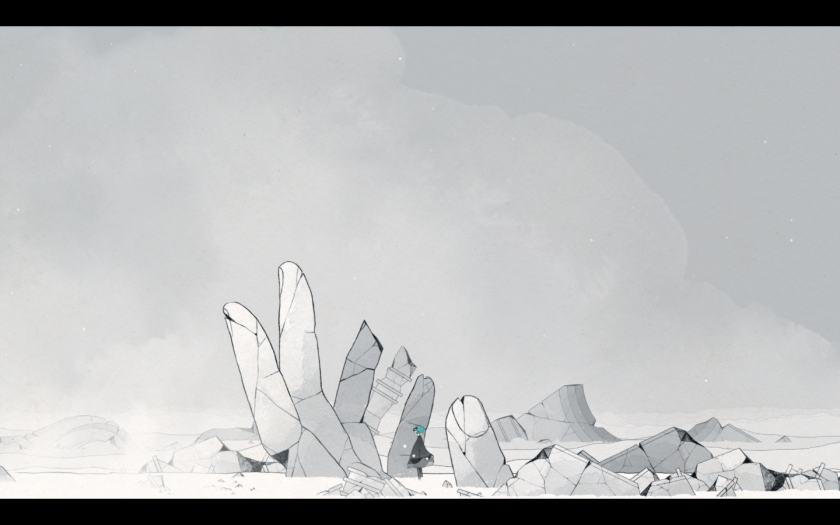
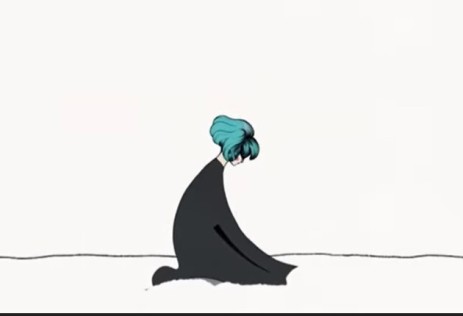
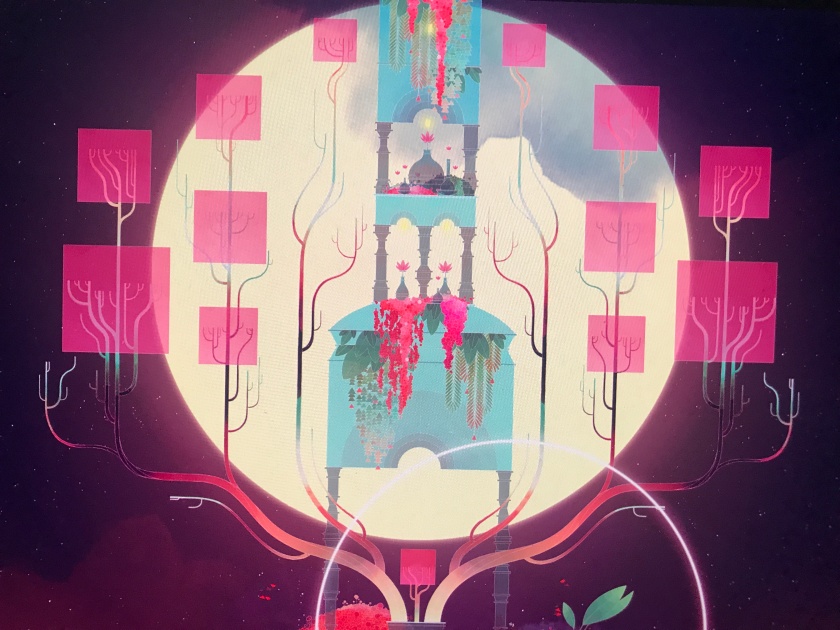
The game opens with the girl, kneeling in the secure palm of a giant hand. I see cracks in the hand; it almost looks like the hand is made up of rocks that were glued together. The cracks and splits of the hand that seems like it’s supposed to be her agent of security could signify her brokenness and loneliness. The opening color scheme is pink. The slow-paced music is accompanied by multiple female vocals that is supposed to represent her voice. But soon, her singing halts. Her voice is lost. Gradually, the cracks in the hands expand and the rock hand falls, as well as the girl. The girl falls down the sky for what seems like an eternity. The cool aspect about platform games is that because everything is 2D, directionality plays a big role in depicting the progress of the game. The girl falling down the sky, the downward movement, is most likely in parallel to her emotions. Her emotions are falling further and further down a deep rabbit hole where it is engulfed by tidal waves of the feelings of grief. 

PC: me

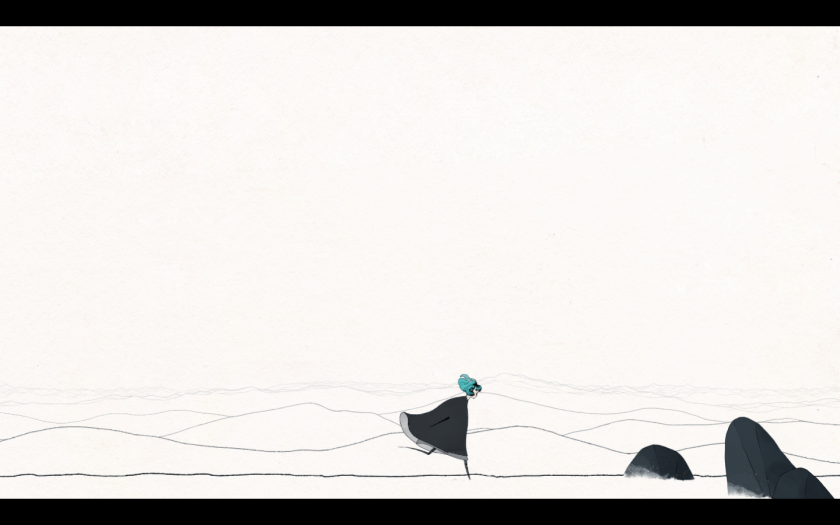
The girl finally touches the ground. She tries to get back on her feet but she struggles after a couple steps. She looks like she has hit rock bottom. She tries to grapple in her emotionally abysmal state. She manages to get on her feet and trudge the white, barren landscape. I feel like the white is supposed to signify the initial emotionless state when you fall into such despair—you don’t actually know how to react and feel because you’re swallowed by so many different emotions at once. The girl then changes her slow walking pace into a run. As a player, I can feel that she desperately wants to get out of her feeling of despair. I finally embark on my journey to trump the complex emotions of grief.

The beginning setting with the white landscape seems to look like a desert. I see desert pyramids in the background. The ground has numerous ruins, again reflecting her emotions. She walks more and more right when she finds that same hand that was in the beginning again. The hand is in the same position but the pieces of rocks are glued back together. The girl walks into the palm of the hand the entire color scheme of white is added with a tint of red. The red could symbolize the second stage of grief, anger.

In this new red phase, the music, so far, is just tranquil piano. However, there are certain parts when the rhythm turns very fast and the entire background is covered by blood-red dust. This may symbolize the short episodes of extreme anger when you fall into grief. The music during these episodes sounds like a combination of high-pitched strings and vocals—the tone of the music is pretty unsettling. During this red phase, the girl has the ability to break the certain surfaces underneath her. When the girl jumps, her dress turns into a solid cube, crushing the loose surface underneath her. This could signify our desire for using physical force when we become enraged. As I am playing more of the game, I can’t stop but appreciate the artistry, the score, and all the sound effects that respond to your movement. Everything is so detailed and feels so meaningful and original. The combination of these 3 things work together to set certain tones. This game truly feels like art.

PC: me

I think I have reached the end of the red phase. I find that hand again and jump into the palm. The color scheme suddenly changes from red to green. Humongous branches with leaves appear out of nowhere. I slide down the branches like Tarzan. I fall into a red tinted green forest. I hear birds in the background. The ground seems very earthy. The square shaped leaves of the trees morph back and forth into a right triangle. I am walking on the forest floor and I see something following me. It’s like an alive rock figure. It is very cute. Still in the green phase, I am in a massive temple-like structure and suddenly a group of tiny birds morph into a big bird that screeches at me and follows me. It chases me like a predator. In the stages of grief, oftentimes you feel like you are being targeted because so many bad things happen after another. You feel like you are being chased by a predator (maybe it’s a person or maybe it’s just a life force) that is preventing you from escaping your pit hole of grief. I feel like that is what the girl is feeling at this stage. Woah. Suddenly I soar through the sky with the bird in the back. Either my interpretation of the bird is wrong or the game is trying to convey, yes, although it may seem like the people around you are turning against you when you are in grief, they are—unknowingly to you—trying to help you back up. I think the game is trying to tell a message to stay hopeful and that the feeling of grief could blind you by antagonizing the people around you as a self-defense mechanism.

PC: me

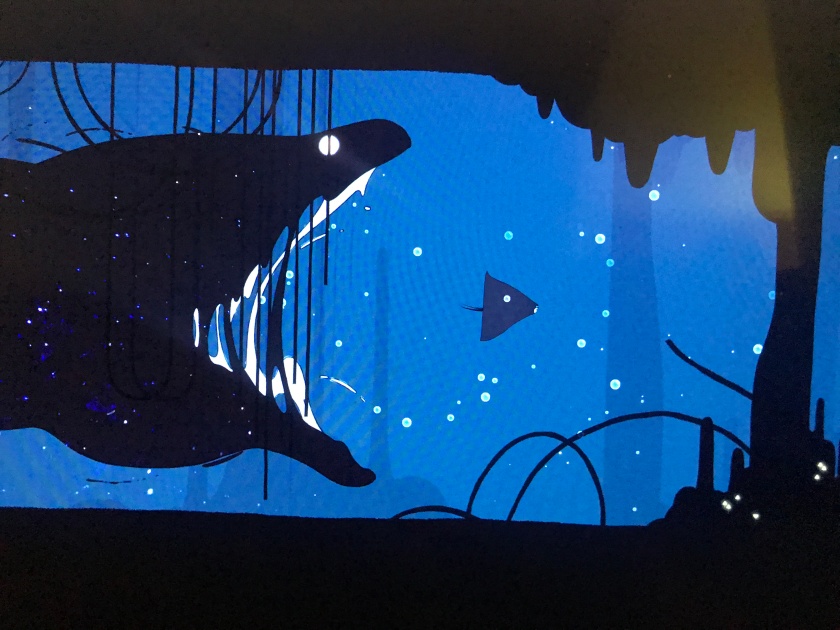
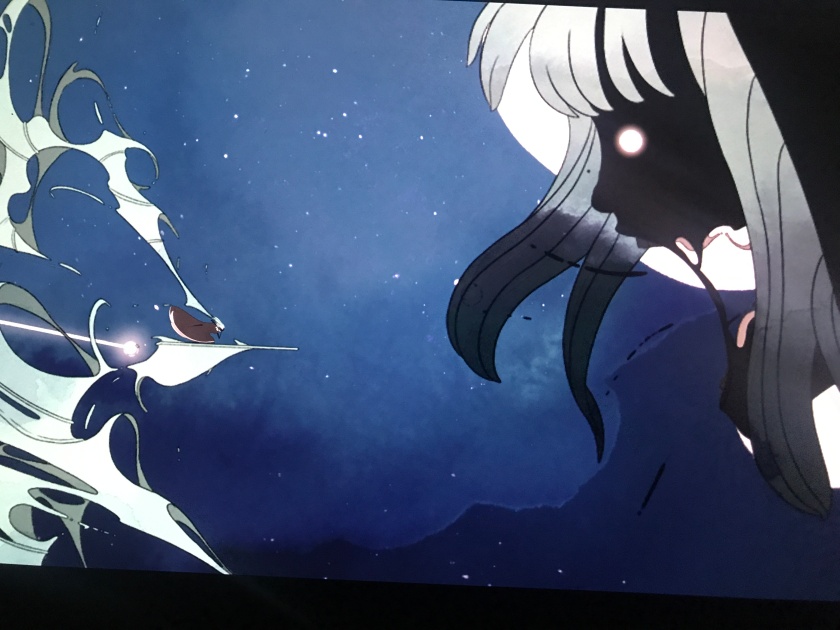
I find that hand motif again but I also see a woman. Suddenly, the color scheme changes to a greenish blue. Also, epic music plays and it starts raining. I think the blue phase is supposed to represent the depression stage in grief from the color scheme, the tranquil music, and the depressing trope of rain. I go down a deep, dark cave. The level of detail and all the colors are so pretty. OMG, I just turned into a fish. I see this cool, pink-shell, glowing turtle. Still in the blue phase, I see the hand again. This time, I actually see the entire girl. The one before, I wasn’t to see the giant woman’s complete face. Now, I can. The big woman’s eyes are closed but quickly open. I am wondering if this woman motif is supposed to represent me: at first the stone woman was broken at first, but gradually, the stone woman becomes fixed, like the protagonist’s emotions. OH NO! This dark bird savagely destroyed the stone woman and is now chasing me. This bird, converted into what looks like a giant eel, chases me through the water caves. I desperately try to run away. The eel gets so close to eating me, but I miraculously get saved by the turtle I saw before. Close call!

PC: me

The color scheme turns from blue back to a pink-ish red. The ground is very floral. The flowers symbolizing growth may signify the final stage of grief, acceptance. You need to grow from your feelings of resentment and depression so you can accept who you are and move on.

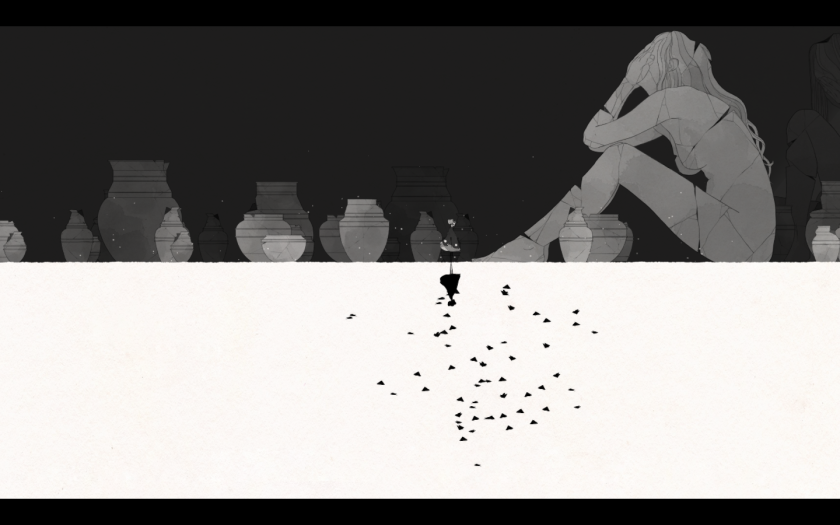
Out of nowhere, the color scheme turns to the color I started with, white. I get swallowed by a girl—I think, a spiritual resurrection of the giant rock girl. I make my way up and find that same hand I first saw when I started the game. The same cracked hand. The cracked hand becomes fixed. The music turns almost all vocal. There is a cut scene of the girl singing. The girl has regained her voice! The physical rock of the woman we saw earlier then becomes completely fixed. There is an intimate moment between the giant rock lady (I think, a physical representation of the girl’s emotions) and the girl. I think the girl has finally come in terms with herself and her emotions. There is a burst of different colors. Epic music plays. The girl has finally escaped her stages of grief! The game ends.

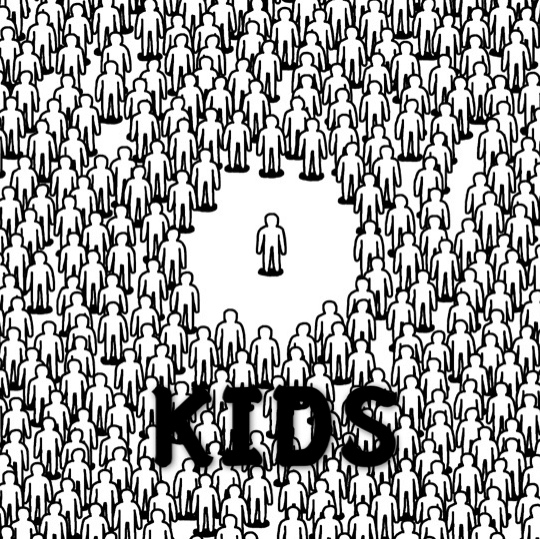
PC: me

KIDS Podcast Reflection

Image taken from game KIDS and edited by Wendy Sun

Our podcast episode in the Longest Rainy Sunday is about the game KIDS. We had a late start to this episode, meeting with Mr. Morgen on Thursday night to discuss about the content of our episode with it being due on Sunday. That being the case, there was effectively 3 days to complete and turn in this episode. Looking back at how we have worked, I have to say the efficiency and quality of our collaboration exceeded my expectations, creating an episode I am overall content with.

            I was the producer, Wendy was the assistant producer, and Roy was the line producer. As a producer, I set up the time schedule for our meetings and job assigned, as well as leading the discussion/conversation we had in meetings. The assistant producer Wendy served a role similar to a manager in the group. She would take notes of conversations we had in meetings and organize work we have done. She edited the image we used for our thumbnail as well as putting together and submitting our final product. Roy was the line producer, but he really did much more than that. Since he has experiences producing music, he voluntarily took up the role of putting together and editing our audios and inserting the background music. The background music used was actual one produced by Roy himself! All members in this group contributed equally to the content of the episode as we pulled what we were going to say from previously written ideas and conversations we had about the game.

            Our primary goals of this episode were to introduce the audience to the game KIDS and analyze how the simple form of this “interactive animation” is success full as a game, looking into some of the themes of the game, as well as sharing our own perspectives. I would say we achieved these goals in general, though not as in depth as we would like to. We first laid out points in our collaborative document, then each of us put down and elaborating ideas under them. This was done in the form of comments, since it would them be easier to make into a conversation. This form of brainstorming and script writing is very different from the usual essay writing I am accustomed to. When we “met up” to talk about our episode, lots of new ideas and more in-depth analysis came up that couldn’t be included in the episode due to the time limitation and the speaking format the podcast episode is in.

            Comparing our episode to the first episode in the series that talked about Minecraft, the main difference seems to be tone of the speakers. While the first episode sounded more like a conversation, our episode seems more directed towards the audience due to the way our script written. My recommendation for later groups producing episodes would be to set up a general framework and communicate frequently.

Gris liveblog

The start

My first impression with Gris is all about its incredible visual elements. The graphics is super aesthetically pleasing and I am hooked already. The start of the game depicts a depressed female character, I assume, in a dark robe, trying to pull away from the desolate environment around her. As of now, her only “powers” are moving left and right :/

The beginning. Source: screenshot taken by me.

Stage 1: Denial

The “stars” she picks up along the way. Source: screenshot taken by me.

The game unfolds rather quickly, as expected. The storyline is prevalent and obvious. Gris, who I assume the main character, suffers from some sort of past traumas which cause her depression and mental pain. She is trying to find a way out. At first, Gris can only crawl slowly and cry. She can barely move.

Stage 2: Anger

As the Kubler-Ross model of grief suggests, after the initial disbelief in what happened, Gris now wonders why it is her. She can actually run now. The environment is still the same: a deserted empty void.

This hand looks like the Golden Bridge in Da Nang, Vietnam – a famous tourist attraction in my country. Source: screenshot by me.
Vietnam's Daring Golden Bridge Takes a “Hands-On” Approach to Tourism |  ArchDaily
Here it is. Source: google image. https://www.archdaily.com/898916/vietnams-daring-golden-bridge-takes-a-hands-on-approach-to-tourism

Stage 3 and beyond…

It seems to me now that Gris is finally committed to “finding a way out.” She is running really fast and she can also jump. She can also “heavy,” a very interesting and useful move given her environment.

The color red is introduced. Source: screenshot by me.

Red is the color of victory and ambition and determination. I think it sends a message here that Gris is seriously trying harder to escape now. The visuals and color element is used to describe Gris’ current emotion and her stage in the grief cycle in very subtle ways.

Gris sliding down a hill. Source: screenshot taken by me.
A storm. Source: screenshot taken by me.

The bargaining stage shows in the “heavy” move I think. Before unlocking this power, Gris is pretty clueless. Now, with this move she can break the grounds or destroy rocks to discover new lands. Gris is making a bargain with her confined environment here, subconsciously asking “even if I can’t get out, what can I do to survive/deal with this pent up anger?”

Reflection. Source: screenshot by me.

Overall, Gris is a powerful game with a prevalent storyline. The platformer structure works well for the game because the emotions come off much stronger in silence. There is no need to explicitly show verbal cues such as crying or swearing or grief since the movement and 2D environment already displays it so well.

Podcast Reflection

This is my first time to produce a podcast. At first, we really had no idea how to do anything, and trouble making any progress. Waiting until the weekend before the deadline, we finally made a decision on the game that we planned to make the episode on. The game KIDS is a minimalist style game or interactive animation that all of us think it is interesting and would have lots to talk about. After deciding the game, we brought ideas of what each of us wanted to cover in the episode, and organized them into a google doc. We spent about 3 hours writing the script together, and that was really productive. When it came to recording, we decided to record all separately. Roy edited the audio, Ryan wrote the paragraph description, and I did the thumbnail image, afterward. 

Through this assignment, I gained a familiarity with podcasting. I’m proud and pleased with how the episode turned out in the end. My group mates, Roy and Ryan, are both really talented and I really enjoyed the time working with them.

Podcast Reflection

As the main producer of Episode 3 titled “Unity in Among Us and Quarantine,” I took responsibility leading the entire group in planning, making concrete schedule, writing a script, and audio editing. I enjoyed that as a group leader I got to work on something that I felt passionate about and be generous with my time. I shaped the majority of how this project looked and I also felt grateful that my teammates inspired and supported me when I needed them. I want to thank Elaine for helping me finalize a overall plan and Andy for bringing out some really interesting ideas. Most importantly, even though I announced a very urgent meeting in slack without any notes in advance, my dear group members always tried their best to come. They wanted this to be good. And I’m proud of the work that we’ve done.

We’re still early in the entire series, but we did draw some inspiration from episode 1. We found their conservational format to be very interesting, and initially we did not have any elements of back-and-forth conversations in our plan. We adapted to a reasonable amount of discussions and started asking questions to each other so that audiences would feel engaged throughout. We also added carefully chosen music pieces. And these music pieces were lined up in a designed order of keys (key signatures) that would offer a smooth transition to one’s hearing experience. Again, this was just a nice addition that hopefully would add a nice complement to our original voice.

Our primary goal is to: 1). declare our critical play 2). present how Among Us has become a successful game 3). answer what message the game teaches. Since the schedule is limited, we were not able to draw references from a lot of places. For example, there was no time for us to plan an interview, go do it with someone, then gather results, and write about them. I’d like to work on that as strong references would effectively add credibility to our own episode.

I found the making of this podcast series to be a very similar process than any other project that we do in our outside this class. It required planning, researching, gathering ideas, collaborating, encouraging each other, confronting new difficulties, and finding ways to solve problems. There was a similar pattern. Also, I’ve learned that as a group leader I was vocal and positive all the time. I enjoyed surrounding ourselves with positivity and encouraging teamwork. Love it! I learned a lot from both Elaine and Andy. And I couldn’t be more happy about what we did!

Gris: Beauty without words

As I joined for the first time and I was amazed by the colors that were presented tome, but then all of a sudden I got a chill down my spine as the hand crumbled away as we were sent spiraling downwards into the unknown. I felt as though I was with this statue, almost reminiscent of hos Steven Universe has the statues throughout the series of the show foretelling something that hasn’t been found or something that was loss.

Now, I start running through this unknown territory and eventually encounter a white wisps that follows me around. Maybe it is there to remind me of something that is loss, but follows me in spirit.

I continue through the puzzles with the white background until I take a turn and stumble onto this new Red society. A place filled with harsh winds and heavy blocks. I felt that my time here was very rage induced, but only ends up hurting myself. This is countered by becoming this large block that helps me gain stance and mobility through this tough time.

In the next area, the land of pink, I found myself walking normally. Then, I discovered this little cube fellow sulking on a rock. He runs away, but I end up chasing him and we become my companion for a short period of time. This helps me gain some help from others, but Im not quite sure how it fits together.

After my unsuccessful attempt at the temple, I start to feel loss and which lead perfectly into the next area of the game. This is the underwater portion, the land of deep sorrows that cant be expressed in words. I feel as though I don’t know exactly what is going on in the game at this point, but I can relate to the background of how the game made the water suppress the thoughts and ideas of positivity and just left you alone. Going around with this looming cloud of naught, left me drained.

I brought some personal feelings into the game at this point and I couldn’t continue as my feelings became to strong for enjoyable gameplay. I understand now that this is the purpose to explain the levels of grief without a textbook or some man with a degree diagnosing you with such and such.

Unity in Among Us and Quarantine

The Longest Rainy Sunday
Unity in Among Us and Quarantine
Loading
/

In this episode of The Longest Rainy Sunday, we look into a game that reclaimed its popularity after a long while that it was created. We analyze why and how this game thrives in the current moment and gathers the eyes of many YouToubers, streamers, and players worldwide. And in fact, we discover that this game requires communication, social deduction, and a whole lot of deception. Among Us came exactly when we need it most: that is the current pandemic that makes people confused and disconnected. Let’s take a critical look into how the game rose to such heights of fame. Ready to listen? Welcome to the third episode: Unity in Among Us and Quarantine.

Sources:

Flanagan, Mary. Critical Play. I, “Introduction to Critical Play”. MIT Press, 2009. 

Lying is super fun: Among Us, Google Image.

Musicas de Piano Masters. “Canon in D (Musicoterapia Com Musicas Classicas Famosas).” 2 May 2013. 

Slovak Philharmonic Orchestra. “Slavonic Dances, Series 1, Op. 46, B. 83 – Slavonic Dance No. 2 in E Minor, Op. 46, B. 83.” 1 Sept. 2007. 

Zheng Zai Ri. “Opening, Parasite (Original Motion Picture Soundtrack).” 30 May 2019. 

Among Us. Steam.

Transcript

Download transcript

KIDS

The Longest Rainy Sunday
KIDS
Loading
/

This is the second episode of The Longest Rainy Sunday. We are taking a look at KIDS, a game that quickly became popular, received large numbers of positive reviews, and raised many discussions between its player base soon after its release. The game takes a different form than many traditional games people may be used to, and we will be talking about how its simplicity and unique way of storytelling captures its players and leads to deep reflections about oneself and the society.

Sources:

Wit, Alex Dudok de. “Michael Frei’s ‘KIDS’ Is A Short Film, Game, And Installation Rolled Into One.” Cartoon Brew, Toggle Navigation, 4 June 2019

Transcript:

Download transcript

Brady’s Liveblog of Gris

Denial: Minutes 1-5

As I started to play through Gris, I had a minimal idea of the objective and meanings behind all the colors. Gris is a beautiful 2D side-scrolling platformer; the art style and soundtrack are pleasant stimulation as I play. I found out that I need to collect spheres of light that followed me (Gris) around as I explore the map. The beginning sequence showed Gris’s main character, having her world crumbling around her, and all the colors faded to white. I was left to walk onward slowly with the character’s head looking downward.

Anger: Minutes 5-45

Once Gris stumbled across the hand, she was standing on; she had an outburst with caused the color pallet of the game to swap from white and black to mainly red. The world became a desert with reoccurring sandstorms of Gris’s anger overwhelming me and throwing me back. The only option for me to move forward (to the right) was to hide from the storms of anger, or make myself heavy and slowly pushing my way through it. This stage was relatively easy and was my least favorite to play through. At this point, I had a tiny idea of what was going on, but I enjoyed the little puzzles. I noticed that when I needed to reach for the light, I had to crush a rock that had a creature inside. Upon destroying the rock, the animal ran away from me; Gris’s anger hurt someone else. When I found the hand again, the primary color changed to green.

Bargaining: Minutes 46-90

At this stage of the game, I began to fall in love with it. Walking left through the forest, I made a friend. Mini-Me liked apples; therefore, I fed him apples (obviously). This stage showcased mainly green with hints of red, demonstrating bargaining with leftover anger. The location was filled with climbing changing trees that either changed on their own or when I jumped. Upon completing the side stage and returning towards the core, I was met with an ability to glide. This allowed me to trek upward and have a run-in with the darkness I let escape when I fell into the white room. Making it to the stop, I had another run-in with the hand, which changed the primary color to blue, where Gris was depressed, an overwhelming feeling.

Depression: Minutes 91-145

Playing through this stage was probably the most enjoyable. It featured an overwhelming blue color and minimal displays of green and red. The puzzles and swimming features solidified my enjoyment of the game. I got to explore the underground cavern of Gris’s world. I had a rough time with the freezing mechanism and using it to my advantage; however, I figured it out and got to travel through the water. Again, I discovered the hand. Gris tried to sing, but she was unsuccessful. The color yellow was added to the pallet; however, yellow was not the primary color; this was only the start of her acceptance.

Acceptance: Minutes 146-220

This stage started rough. The darkness chased Gris through the deep where only small amounts of yellow light guided the way. At first, I thought I had escaped until I got chased again. I was saved by a red turtle, which means my anger guided me and saved me from the darkness. Back at the core, I explored upward. This stage showcased all the colors working together, but not harmoniously. When I finally got to singing ability, I ran around the map seeing all the plants I could uncover. I enjoyed turning the world feature, which allowed the expansion of the map and new ideas for solving the puzzles. Upon reaching the top, I was met with a stellar view where yellow was the most prominent colors: Gris was recovering.

Ending: Minutes 221-240

When I thought I was beating the game, I was met with darkness again. This darkness took all the color from the world and swallowed me with it. The screen was covered in black. When I reached the top, the world was white and black, like at the start of the game. However, this did not stop me from making my way back up to the hand to sing once again. The color was brought back to the world, and I made my way to the light pathway. That is where my gaming experience of Gris ended.

Ending Thoughts:

Gris was a game I was not expecting. It ended in such a beautiful not that I went straight to Youtube to watch a video about it. Knowing the competition was organized by the Kübler-Ross model of the five stages of grief allowed me to focus on changing colors during my playthrough. I enjoyed noticing the hints of colors in new settings, such as the red in the bargaining stage. It demonstrated that there is no straightforward cycle of grief and that it is mixed together. Getting to learn more about the five stages of grief through Gris puts a perspective to what others are going through, especially the overwhelming feeling of depression that overtakes all other emotions. As I progressed, I noticed what affect the colors had on the layout. Red was dominant because it was the first color we experienced. Green allowed red to enter in the stage because anger does not just go away. Unlike the other colors, blue covered the entire screen when it was discovered. Finally, when yellow was introduced, it only took up the game’s background for a few moments. The way yellow was added demonstrated that acceptance does not just “click;” acceptance takes time and energy. I believe the developers chose to make a platform game to explain grief’s complicated feelings through 2D steps. Grief is not filled with simple, chronological stages. It is a mix of emotions that is not merely five stages. Gris is not a platformer like grief is not just stages, because you can expand on it and demonstrate let the other types of genres and stages influence and shape the experience. 

GRIS liveblog

Watched the opening sequence: The game started with a woman falling after a hand collapsed. This is most likely symbolism to life failing her and collapsing on her in some way.

The first part of the game is meant to represent the first stage of grief, denial. This is seen in her arched back, low head, and bent knees. Clicking the x button on the controller causes her to fall, farther symbolizing her disbelief. She seems to not believe what happened and is looking through her mind t figure it out. After walking a bit more it gets cloudy, and bird looking objects fly through, potentially symbolising her thought process in understanding what happened.

After the cloudy part, something seems to click in her mind. Her pace gets quicker, and she is finally able to jump. This potentially represents the second step in grief, resistance. It is characterized by frustration and anger at others and their circumstance. Rocks appear on the screen potentially symbolizing the hardness of her mind.

After walking more, she interacts with a glowing object and seems to uplift herself. This could symbolize bargaining and hope, the third stage. She sees the object as hope and is looking to avoid farther despair. 

She seems to collect these objects, and they create paths for her. Her hope could be creating different opportunities for her, and advancing her growth from a state of grief. 

After she sees the remains of the collapsed hand, symbolizing seeing the person or event that failed her, she falls down in despair, and the color scheme changes from white to red. This represents the fourth stage of grief, sadness. 

After a large fall, a red wind seems to be pushing her back, but you are able to move forward. It seems like she is trying to move forward from her grief. After moving higher, fighting the wind, a large structure starts moving her to higher ground. This could be the start of the final stage, acceptance. 

After interacting with an altar, she is able to harden herself to combat the wind. This represents the resolve she got from her hardships and her ability to push against the world. The next sequences seem a bit strange and hard to interpret. She falls down and sees a reflection of herself. When she reaks a statue of a grieving woman, she gets pushed back up. After connecting two circles, objects start moving around, helping her get to where she needs.

After completing these puzzles she sees the hands again, but this time the screen turns green, and she seems to grow positively rather than negatively. There seems to be much more life than in the previous parts of the game. 

She befriended a stone creature which can be seen as a step in moving forward.

The stone creature helps her find a light object, which allows her to move forward. She is accepting others more. She has a fight with a large black bird which can be seen as representing her hardship. She rings a bell in order to defeat it. She sees the hand again, and this time the picture turns blue and it starts raining, symboling another period of sadness. 

The water area is challenging to get through, but after I got through it I found it interesting that she seemed to get her voice back. She might have lost it when her ordeal started. With her voice, she is able to continue to do advance herself.

Looking back, I think I might have been over analyzing the game and been moving too quickly. The different colors and stages represent the stages of grief. The first one is denial. The second one is anger, represented by the color red and the ferocity of the wind. The third one is bargaining, as she bargains with the stone creature to advance herself. The third one is sadness, represented by water and tears. The last one is reflection and acceptance. In this stage she confronts the stature, and regains her voice.]

This game is fairly complex for a 2-D platform game. It does not have the sense of directionality that a normal one has. You go all the way up in the sky, or way down to the depths below sea level. Sometimes you go backward to go forwards. The huge scope and lack of directionality are what make this a perfect medium for what the makers wanted you to feel. They wanted you to understand the stages of grief by allowing you to explore the world, solve puzzles, and observe the symbolism that the game produces. The game does a brilliant job of allowing the gamer to go through the stages of grief without being obvious. It is both hidden behind the platformer, and an integral part of it. 

css.php