Play Make Write Think

Podcast Reflection

In doing our podcast, Survival in Minecraft and in Quarantine, the first step in our process that we each took was just to get our ideas about what direction we wanted the podcast to take on a Google Doc. This stage involved a lot of ideas that we didn’t end up using, such as Minecraft Youtubers and Minecraft server games. Next, we organized the doc to create a general structure, also adding some scripted lines; however, we also made sure to leave ample space in the script for unscripted conversation so the podcast would sound natural and have more depth. Writing the script was something we all split evenly. Finally, when it came to recording, we actually recorded twice – once was a rough draft, and the second time was the real thing. This was very effective, as in the first recording we got all of the ‘bad stuff’ out of our system and really hit our groove early the second time. Afterwards, I did the editing for the video using Audacity and iMovie and the Bibliography, while Andrew and Ranjan did the podcast image and podcast paragraph. 

Our ultimate goal in the episode was to tackle what made Minecraft so enjoyable, whether in survival or creative, because at their core, these two game styles involve a lot of menial labor, and also what made Minecraft so popular during the pandemic. Our strategies for doing this were having each group member write a paragraph that leveraged evidence from our readings to make a claim about what made the game fun. For example, I suggested survival was fun because of the probing/trial-and-failure element that helped define your version of success. Our unscripted conversations responded to each person’s paragraph and went deeper into what made the game fun. 

In terms of learning outcomes, I felt the most improved in teamwork, writing as a process, and interacting with text: the first two learning objectives discuss the ability to make use of complex ideas in texts and to use them to make arguments, which I think we all did. Teamwork was one thing that was worked on but, quite frankly, I’m very happy to have worked with Ranjan and Andrew – they were communicative, hard-working, and efficient. Finally, I think my ability to write as a process improved, as in creating a concise argument from our messy brainstorming document, I was working the muscle responsible for research, revision, and reflection (about what was working and what wasn’t). 

I noticed a few things in doing the podcast. Firstly, the process for doing podcasts and essays is quite similar in that the ‘rough draft’ is where you figure out what you want to say – this holds true for both essays and podcasts (where the rough draft is, I think, the first recording). One thing I want to improve is my ability to integrate more texts in a more fluid manner. Finally, I suggest that groups record twice – the second time will be so much better.
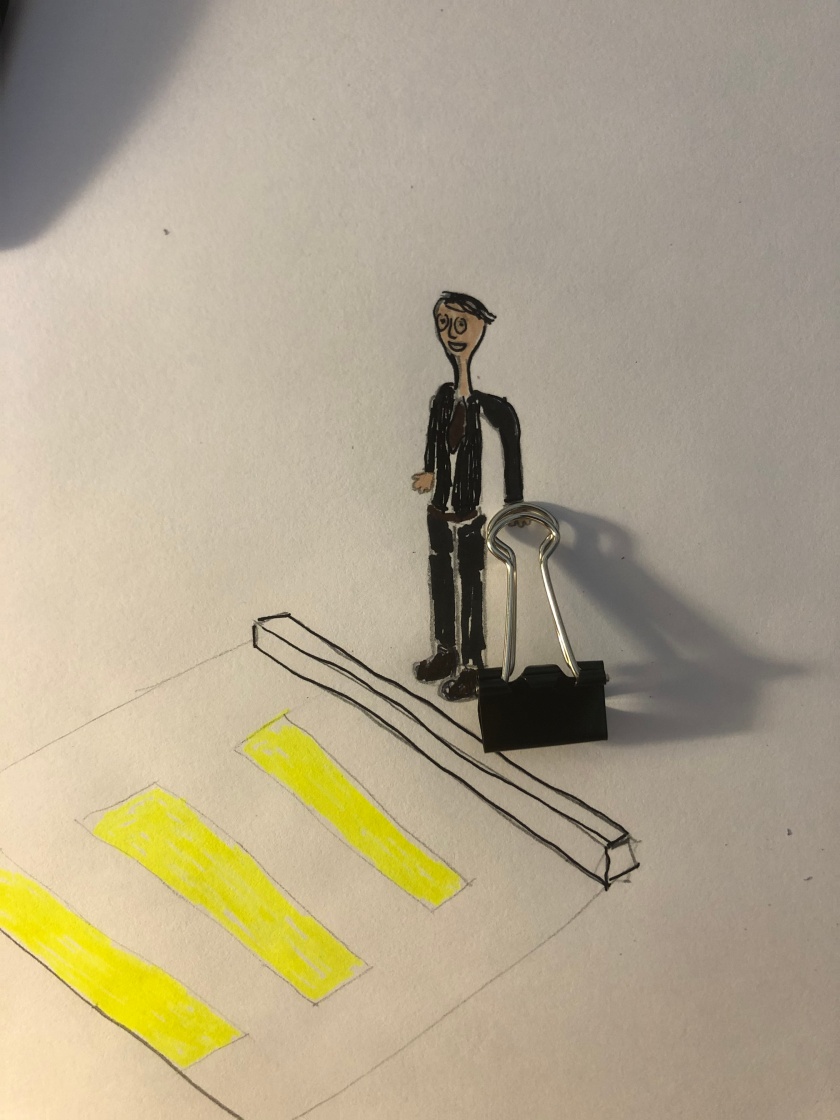
Side Quest 5

Drawn by Yono Bulis. Photo taken on iPhone by Yono Bulis.

When I first saw the black clips as a child, I thought they were supposed to be a briefcase, so when I saw it laying on my desk, I knew exactly what to do for this assignment. My drawing skills are pretty terrible, but I tried to show a businessman at a crosswalk with his briefcase – this seems like the perfect example of a briefcase’s ergonomic use, but lo! It is not a briefcase, but a binder clip.

Yono's Yak Yard 2020-09-20 23:13:59

  • Computer: My connection to the outside world.
  • Phone case – representative of my phone and driver’s license. I used the phone to take the picture and I’m not adding my driver’s license because my picture looks bad. Also, it is illegal (?)
  • Blue big notebook: Math.
  • Green big notebook: Chemistry. I dislike opening this one.
  • Purple big notebook: Biology.
  • Blue small notebook: PACE.
  • Red small notebook: Writing
  • Pink small notebook: Health.
  • TI-84: Handy for calculations or to push random buttons when you have no idea how to solve a problem.
  • Pen and white-out: I don’t like to use Pencil since it feels slow, takes time to sharpen, and makes a screeching sound.
  • Blank sheets of paper: I do calculations on these.
  • Lined sheets of paper: I re-take notes on these.
  • Book: Extreme Economies by David Grann. I like it so far. I think I’d have this in my backpack, as something to do in free moments.
  • Expired Water Bottle: It just feels wrong to throw out (can you even throw out water? Doesn’t seem kosher).
  • Laminated Sheet of Paper: Somehow adds to the ambiance.

Since I am studying from home this semester, it felt weird to consider what I would have in my backpack, but these things all felt like they deserved a spot. I’m so much more than the sum of the significance of these things in my backpack, so I wouldn’t say its representative of anything more than my academic work. This assignment was challenging because I had to make decisions about what things represented me most: a backpack only has so much room, and this one is already quite heavy. To make this image, some choices I made were to write out a list of things I use in my daily routine, and then combining them all in a way that suggested organization, when really I’d be less deliberately organized with an actual backpack. I do not think that the picture is writing, but the list and paragraph definitely are. I think a catalog of my stuff can qualify as writing if it is written: a picture doesn’t feel like writing, I think.

Player Narrative Reflection

In my Player Narrative, I discuss how three games: chess, Minecraft, and Fantasy Football influenced me as a player. Although I played more games, these games were the most important to me because they largely shaped me more than other games in that they showed me particular aspects of myself, such as the desire to explore (I learned this from Minecraft, from example). My literacy narrative reads like a story of my overcoming a critical flaw in the way I read and write, but my experience with games is substantially less dramatic, so I approached it in more of a “how did each game change” manner. The primary structure of my player narrative is a paragraph or two dedicated the way each game changed me and the way I learned from it. Finally, a new idea I learned is that games actually do a lot for me than I realized – I learn new things about myself.

Liveblogging “Gone Home”

Pre-Door:

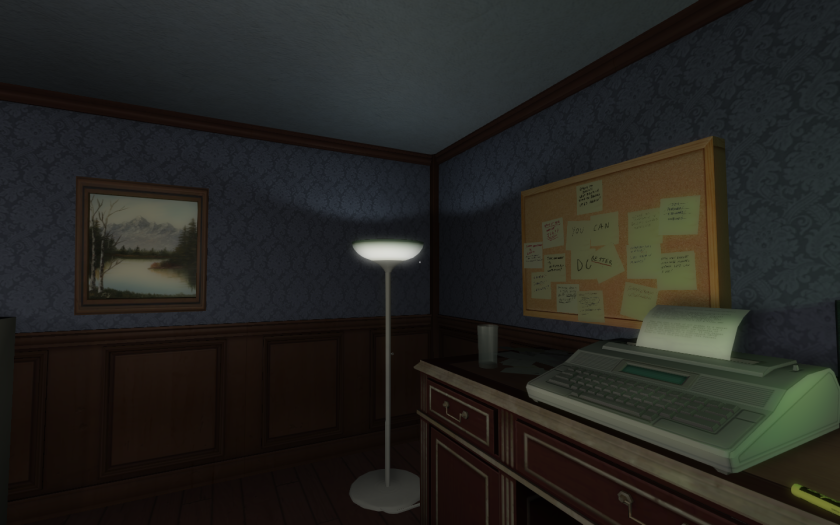
Just got through the door. Took a lot longer than it should have. Some of the things I tried before finding and using the key were: moving toward the door hoping to break it, throwing the Christmas Duck at the door, throwing the cup at the door, and doing a combination of the above. First few minutes served as learning: how to move and how the game interacts with me. I notice I am probing on a very deep level: I almost feel like a child in a candy store in the sense that there’s one hundred things I want to try, hopefully succeeding in one or two of them. Some other notes: I feel as though I am not Telescoping practically at all. I literally do not even know a single goal, but perhaps this has to do with core idea of the game. One thing that struck me in the second Bogost reading was the phrase “the medium is the message” and it is likely this is what developers hoped for at the start: confusion at the very start before one understands their tasks, much like the situation in which one comes home and no one is there. Enjoying it so far.

Main room: Okay things are getting a wee bit scary. Turned sound on: mistake. The voice recording of our character saying ‘Sam’ is bone-chilling, and I thought something jumped out at me when I opened the bathroom door. Maybe I’m just a wimp. My curiosity overtakes next fear, and I shall continue through. Hope we meet again. 

Hallway: I’ve just been informed that the main room is called the ‘foyer’ by the map. Duly noted. This hallway is also terrifying, just like something out of “The Shining”. Up to this point, Probing has revealed a few things: your relationship with your sister Sam is rife with envy: Carol mentioned it in the postcard, and you have two trophies in the foyer. Scoreboard reads Katie 2: Sam 0. Apart from this, this is a new house – I picked up on this when postcard read “weird” as it pointed to address. Also, what is a “dejeuner”? Things to note: your great uncle, Oscar, died, and we don’t know who is the person in the soldier photo – Desoto.

Dads office and room between it and hallway: Unfinished letter – someone must’ve left in a rush. Also, time travel and the assassination of JFK. Maybe this is a frightening joke or something. Seems very mad scientist-y. Dads office filled with books, I’d wager there’s a secret door somewhere here. Also looks like your dad almost got fired. 

Hallway again:

Crumpled note does not bode well. Uncle went ‘psycho’. Also, no-go on the secret door frontier. Disappointed. Entered the TV room – man, this place is freaking me out. Crouch allows you to see the novel ‘Ghosts and Poltergeists’ under a bunch of pillows. No bueno.

This image has an empty alt attribute; its file name is screen-shot-2020-09-13-at-11.44.54-am.png

I chose this photo because I think it captures my main feelings throughout: one one hand, something feels incredibly wrong and scary. There are signs of haunting, or science fiction horror, and of family abandonment. On the other hand lies the serene answer; your family is not home right now, and this can all be explained by a simple misunderstanding. And in the middle is the light – the curiosity guiding you through it all.

Combophoto

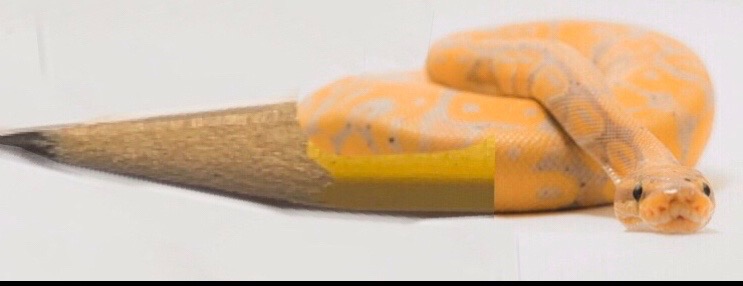
Combo photo of two photos: PC for snake photo is Timothy Dykes via Unsplash.com, and PC for pencil photo is Yono Bulis via his photography

This photo combines a photo of a pencil and a photo of a snake. I combined the two of these using a combination of Pixlr and Snapchat (Snapchat, weirdly enough, was very easy to use for photo editing, especially for some of the minute details Pixlr couldn’t get easily fix).

Initially, I was hoping to combine a photo of a black snake’s with a pen tip, which I thought would look cool, but when I saw the photo of the snake, I quickly visualized a pencil combining with the snake’s tail. The colors seemed to fit in my imagination, and I found this particular combophoto to be striking as the snake’s tail abruptly (perhaps a bit too much) ends and becomes a pencil. I took the photo of the pencil myself, and after deciding on these two images, I set off to use Pixlr.

Through Pixlr, I was able to combine the photos into one, but the colors did not exactly match and one could very clearly see the line separating the two photos. So, on a hunch, I took the photo I had and went to Snapchat, which I’d used for some photo editing before. Snapchat is very user-friendly for photo editing, so I was able to do some round-edge cropping to both fix the color and make it so that the line separating the two photos wasn’t so obvious. Some issues present are that the tip of the pencil is a bit blurry, and in some areas there seem to be ‘creases’ that mark crop work. Overall, this image, to me, conveys the notion that hard work hurts. After spending a long time writing for notes or other work, my pencil often feels like a small snake gnawing on my fingers and wrists.

Works Consulted

“Snake Images and Pictures” Unsplash, https://unsplash.com/images/animals/snake. Accessed 6 September 2020.

Pixlr, https://pixlr.com/x/. Accessed 6 September 2020.

Snapchat, https://www.snapchat.com/. Accessed 6 September 2020.

Avatar Photo and Explanation

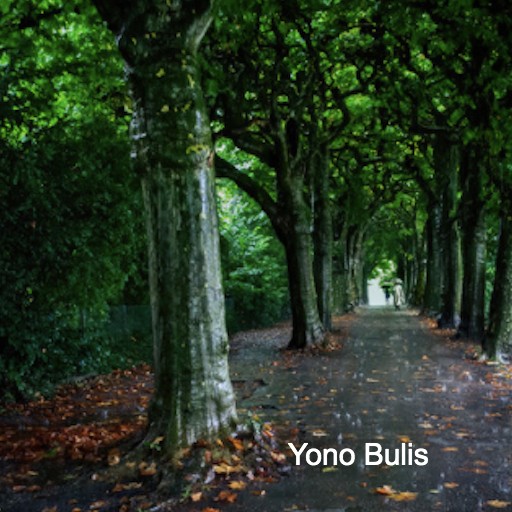
Photo Credit Hans Nater

I chose this photo of a line of trees for a number of reasons. Firstly, trees symbolize giving. From a scientific perspective, they provide oxygen and power our ecosystem. From a literature perspective, trees have long expressed wisdom and generosity, whether as Ents in Tolkien’s Lord of the Rings or as the tree in The Giving Tree (I confess, the latter of these two was low-hanging fruit, pun not intended). I think giving is an important aspect of being a member of society, and in many ways, trees anchor this sentiment. Secondly, trees offer a source of comfort in an ever-changing world. Most species live to one hundred years or less, with some notable exceptions being Giant Tortoises and certain Jellyfish, but many trees can live for thousands of years. Some trees that are alive today were around before Christianity and Buddhism. Acknowledging trees like these keeps me grounded, especially during times where it feels like the world is changing too much for my liking. Other mini-reasons I chose this photo are my interests in biology, science, and photography (somewhat). Finally, this particular photo is quite pretty. It reminds me of a joyous occasion I attended when I was very young, so nostalgia played a role in my choosing this photo as well.

Literacy Narrative Reflection Post

The controlling idea of my Literacy Narrative is my process in overcoming a crucial oversight as a reader and writer: the inability to think critically and analytically about writing. Through writing my Literacy Narrative, I actually saw the way I have improved as a writer, and the main thing I learned from this is that the relationship between learning/improving as a reader and writer and time is far from linear. Although from elementary to middle school my vocabulary expanded, my sentence structures became more sophisticated, and my ability to elaborate on some complex ideas improved, my analysis might have actually gotten worse. Conversely, when I actually did find ways to improve my analysis, my ability to explain complex points wasn’t fully up to par. I think the most important thing here is that I keep trying: this will keep me mindful of both strengths and weaknesses.

I enjoyed doing the pre-writing exercises; I haven’t really done free-writing in a long time. Free-writing kind of showed me that this problem I had to overcome was the defining aspect of me as a reader and writer. The main thing I learned about myself, though, is that habits control much of the processed behind my reading and writing. Doing a few small key things, such as dedicating time to think about a particular passage or jotting down some notes, can be hugely helpful. Finally, I think the sentence people might find the most interesting is this: “After I wrote the rough draft, it continued to degrade with each coming day; my daily tinkering, a result of weak analysis desperately trying to find something to hang onto, led to a thesis that was long, complex, and almost impossible to argue” (2). Typically, the wisdom goes that the more time you spend on an essay, the better it will be, but I think people might find that sentence interesting since it suggests something of an inverted-U curve, that at a certain point, i’ve written the best essay I can, and apart from trivial grammar fixes, changing any more of the thesis, evidence, or reasoning in the essay will actually make it worse.

css.php